
Some hotel links may earn us a commission at no extra cost to you. Buttons marked “Search” open Booking.com search results; confirm the property, room and full price before booking.
Beyond Path Asia · Malaysia
Kuala Lumpur
Skyline views, neighbourhood walks and a generous introduction to Malaysia.
Plan your Kuala Lumpur visit
Suggested stay: 3 nightsPeninsular MalaysiaAllow two full exploring days between arrival and departure. Group the programme into KLCC, Chinatown and an early Batu Caves outing rather than crossing the city repeatedly.
Why visit Kuala Lumpur?
Give Kuala Lumpur time beyond the airport connection. KLCC, the older streets around Chinatown and the city’s Indian and Malay food traditions offer very different days. Three nights allow two full exploring days without filling arrival day with reservations.
Kuala Lumpur rewards a visit organised around neighbourhoods. KLCC gives you contemporary architecture and park time; Chinatown, the river confluence and Merdeka Square reveal a different urban story. Museums add context that is easy to miss if the programme consists only of skyline viewpoints. It also makes a useful first base for a longer peninsula route: recover from the flight, arrange onward transport and choose two or three substantial outings. The trade-off is heat, traffic and distances. A hotel described as central is not necessarily within a comfortable walk of the places you want to see.
Best things to do in Kuala Lumpur
Use the sights below as a menu for two or three full days. Keep one main district for each half-day and book the timed attraction first. The suggested visit lengths are editorial planning allowances, excluding the journey and queues. A park, a museum and a viewpoint offer different experiences; you do not need every attraction to make the city stop worthwhile.
Petronas Twin Towers & KLCC Park
Book a timed tower visit through the official operator if the observation deck matters to you. Allow roughly 1½–2 hours around the booked visit and park; admission and time slots are separate from simply seeing the towers from outside.
Visitor information · Map: Petronas Twin Towers Kuala Lumpur
Choose the actual tower ticket category and compare what is included before paying. The park is useful even if you skip the observation deck. A booked tower slot should determine the surrounding programme, with a meal and travel buffer rather than a minute-by-minute sprint.
Batu Caves
Choose an early outing and allow around 2–3 hours plus travel. The temple staircase is steep and exposed; wear clothing suitable for a working Hindu temple and keep food away from monkeys. This is outside the central walking districts.
Visitor information · Map: Batu Caves Selangor
Arrange your return journey before climbing and allow for the group’s pace on the staircase. A visitor who cannot manage the steps can still make a separate decision about the ground-level setting; do not describe the whole site as an easy step-free visit.
Chinatown & the river confluence
Link Petaling Street, nearby temples and the streets around Masjid Jamek in a half-day walk. Break for lunch rather than trying to walk across the entire city in afternoon heat.
Visitor information · Map: Masjid Jamek Kuala Lumpur
Choose one coherent walking circuit rather than treating Chinatown and the confluence as a long list of compulsory photo stops. Leave room for a working temple or shop to be busy, closed or unsuitable to enter when you arrive.
Islamic Arts Museum Malaysia
Give the galleries an unhurried 1½–2 hours. This is a useful indoor anchor for a wet or particularly hot afternoon. Check current exhibitions and admission before travelling.
Visitor information · Map: Islamic Arts Museum Malaysia Kuala Lumpur
Check the museum’s own visitor information for galleries, admission and any special exhibition. An indoor visit is useful in rain, but still needs transport and a realistic length of stay; it is not a spare ten-minute gap between distant reservations.
Central Market and the Pasar Seni area
Central Market is a useful stop for Malaysian crafts and an indoor pause near the older city streets. Allow roughly 45–90 minutes, longer if you want to browse carefully or eat nearby. Compare the work and materials rather than buying at the first stall, and ask before photographing a maker. Pair it with Chinatown, leaving time for the short connecting streets instead of booking a second distant attraction immediately afterwards. The market visit and any workshop or special event are separate choices.
Merdeka Square and the Sultan Abdul Samad exterior
Use the square to understand how the older civic centre differs from KLCC. Allow about 30–60 minutes around the public space and surrounding facades, preferably before the hottest part of the day. This is an exterior walking stop, not a promise of access inside every government or heritage building. Check for events, road restrictions and work around the square. It combines naturally with the river-confluence area, while the Botanical Gardens deserve their own time rather than a rushed add-on.
Perdana Botanical Gardens
Choose the gardens for a slower outdoor morning, with roughly 1–2 hours for a selected section rather than an attempt to cover the entire area. Bring water and decide where you will enter and leave before the car drops you off. The grounds and nearby separately operated attractions should not be treated as one all-inclusive ticket. A shaded bench or café break can be the point of this outing; do not turn a recovery morning into another long march in the heat.
Petaling Street and a focused Chinatown walk
Give Chinatown a slower 60–90-minute circuit around Petaling Street and adjoining lanes, in addition to any museum or meal. Look at covered walkways, working shops and temple entrances as well as market stalls. Some businesses open later than the walking streets themselves, so an early architectural walk and a shopping visit are different plans. Keep valuables secure in busy areas and ask before entering or photographing religious spaces. Pair this with Central Market; use rail or a car for the next distant district.
Getting around Kuala Lumpur
Walk within KLCC or Chinatown, then use urban rail or a car for the next district. Check the station exit nearest your stop; a rail map does not show the final pavement walk. Keep Batu Caves as a separate outing and allow time to return before an afternoon booking.
2-day Kuala Lumpur itinerary
Day 1: old streets and city views
Start around Chinatown and the river confluence, stop for lunch, then take a hotel break. Visit KLCC Park in the late afternoon and use a pre-booked tower slot if wanted.
Day 2: Batu Caves and a flexible afternoon
Visit Batu Caves early. Return for lunch and choose the Islamic Arts Museum or a slower neighbourhood afternoon. Keep the evening near your hotel rather than adding another cross-city transfer.
Use this as a flexible structure, with arrival and departure days counted separately. See the two-week Malaysia route or the three-week route.
A workable morning and afternoon rhythm
On the first full day, start with Merdeka Square and the confluence, continue towards Central Market and Chinatown, then stop for lunch. Keep the hottest hours for the museum or a hotel break. Visit KLCC towards the cooler end of the day, using your tower reservation to set the order. If that feels too much, move the museum to the second afternoon rather than shortening every stop.
With one extra day
Use a third day for Perdana Botanical Gardens and an unhurried museum visit, or spend longer in the neighbourhood you enjoyed most. This is more useful than automatically adding another skyline viewpoint. Arrival and departure still need their own allowance; three hotel nights do not always produce three full sightseeing days.
With children or limited walking time
Choose one substantial outing, one meal near that outing and a park or hotel pause. Keep Batu Caves separate from a long heritage walk. A short rail journey can still involve station corridors, stairs and the last walk to the door, so check the route against the actual group rather than the train time alone.
Where to stay in Kuala Lumpur
KLCC suits skyline views and park breaks; Bukit Bintang puts evening food and shopping close by. Chinatown offers heritage streets and cafés. Check the walk to a useful rail station rather than choosing by the skyline photograph alone.
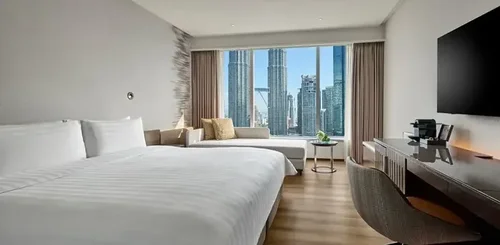
Traders Hotel Kuala Lumpur
Location: KLCC
Best for: Park-side access for a first city stay.
Trade-off: Choose the actual view category; a tower view is not included in every room.
VIEW ON BOOKING.COM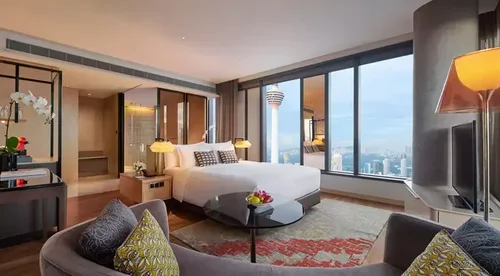
EQ Kuala Lumpur
Location: Jalan Sultan Ismail
Best for: A central, higher-budget city stay.
Trade-off: Compare total room price and occupancy before paying for a view upgrade.
VIEW ON BOOKING.COM
Alila Bangsar
Location: Bangsar / Brickfields edge
Best for: A different neighbourhood base.
Trade-off: Expect journeys to KLCC; this is a different location choice from staying beside the towers.
VIEW ON BOOKING.COMEssential travel tips for Kuala Lumpur
- Use rail for the longer urban hops and walk within one district at a time.
- Allow an indoor alternative for thunderstorms; avoid exposed viewpoints during lightning.
- Confirm the exact vehicle and suitable child restraints when arranging transfers.
Where to eat in Kuala Lumpur
Dharma Realm Guan Yin canteen
161 Jalan Ampang. A useful vegetarian lunch lead near KLCC; check the day’s service before going.
Menu & current informationEntier at Alila Bangsar
58 Jalan Ang Seng. A separate sit-down meal rather than a quick stop on the KLCC walk; ask about vegetarian arrangements when reserving.
Menu & current informationVegetarian or vegan? Ask about shrimp paste (belacan), fish sauce, stock, anchovies, egg and dairy. A vegetable dish is not automatically vegetarian.
Plan meals around the day
Plan lunch in the district you are actually exploring: the Jalan Ampang canteen suits a KLCC day, while Entier is a separate Bangsar outing that needs a reservation and transport decision. A vegetable dish can contain stock or anchovies; explain what you avoid rather than relying on a menu heading. Keep a simple meal near the hotel for the arrival evening and reserve a special dinner for a day without a long transfer.
How to get to Kuala Lumpur
KLIA Ekspres publishes 28 minutes between KLIA Terminal 1 and KL Sentral, with a further terminal connection for Terminal 2. That is train time, not airport-to-hotel time. Add immigration, baggage and the final city journey. For Melaka allow about 2–3 hours by road; for Cameron Highlands around 4–5 hours, with traffic and breaks able to extend either.
Read the complete transport guide.
Airport to the right hotel district
Compare KLIA Ekspres to KL Sentral plus the final hotel journey with a direct vehicle for the whole party. Count passengers and luggage before choosing a vehicle. The train journey is only one part of arrival; immigration, baggage and the last connection can change the practical choice, especially late at night.
Onward to the peninsula
Choose Melaka for a heritage stop, Cameron Highlands for a cooler mountain contrast, or Ipoh and Penang for a west-coast rail sequence. Confirm the actual terminal, station or hotel pickup. Avoid scheduling a timed city attraction immediately before a long road transfer: a relaxed checkout and a reliable departure usually make a better travel day.
Best time to visit Kuala Lumpur
KL is a year-round city stop with heat, humidity and rain possible in every month. Plan exposed walks early and retain an indoor afternoon. Choose the dates for the island or nature portion of your wider trip, then fit the capital around it.
Compare Malaysia’s regional seasons.
Outdoor mornings, flexible afternoons
Treat Kuala Lumpur as a year-round city stop with heat, humidity and rain possible. Put exposed streets, gardens and Batu Caves early, then keep an indoor option for later. A weather forecast changes the order of the day more usefully than a promise that one month is completely dry.
Holidays and booked visits
Weekends, public holidays and school breaks can affect hotel demand and queues even when the weather pattern is similar. Check the tower calendar for the actual date; do not assume every Monday or holiday follows the same visiting arrangement. Plan the wider trip around the coast or nature destination with the stronger seasonal constraint.
Hidden gems and details to notice
At the Klang–Gombak confluence, look at how the older river-facing city differs from KLCC. In Chinatown, notice the five-foot ways and working shops between the better-known photo stops.
Read the city at street level
Notice how five-foot ways shelter older shopfronts and how the river confluence shaped the historic centre. Stop at ordinary businesses where visitors are welcome, leaving doorways clear. A small architectural detail can explain more than another photograph taken from the middle of a busy pavement.
Separate an exterior look from a full visit
A photograph of a tower, temple or civic building does not require the same time or reservation as entering it. Decide which interiors matter to you and spend time there; let the rest remain short stops. This keeps the day interesting without turning every landmark into another ticket.
Kuala Lumpur travel FAQ
Is two nights enough?
Two nights can work for a short stop, but usually leave only one full day. Three nights make Batu Caves and the central districts easier to combine.
Do I need a car in Kuala Lumpur?
Usually not for this city programme. Rail, walking within districts and occasional car transfers avoid hotel parking and city driving.
Should I pre-book Petronas?
Yes if going inside is important. Choose an available official timed slot; the exterior and park do not require a tower ticket.
Is KLCC or Chinatown the better base?
Choose KLCC for the park and skyline; choose Chinatown for older streets and nearby food stops. Compare the actual walk to a useful station and the room category, then use the accommodation section to shortlist.
What can I do during heavy rain?
Use the Islamic Arts Museum as an indoor option and leave outdoor viewpoints flexible. Pause exposed walks during thunderstorms rather than trying to complete the whole itinerary.
Can I visit Batu Caves on arrival day?
Only keep it as an optional extra after a comfortable arrival. Immigration, luggage and the hotel journey make the flight landing time a poor starting point for a fixed sightseeing reservation.
Is Kuala Lumpur worth visiting beyond the towers?
Yes, if you give the older districts and a museum time as well. Chinatown, Central Market, Merdeka Square and the Islamic Arts Museum create a different day from KLCC. Choose around your interests; two substantial days generally make a more rewarding introduction than a rushed airport stopover.
Do Central Market and the Botanical Gardens belong in the same walk?
They are different stops with separate access planning. Central Market pairs easily with Chinatown; the gardens need a chosen entrance, time on site and an onward journey. A map may make the gap look modest, but heat and the actual pedestrian route matter.
Do I need to visit both Central Market and Petaling Street?
Only if crafts, shops and street-level exploring interest you. Central Market is an indoor craft-focused stop; Petaling Street is part of the Chinatown street circuit. They can share one half-day without pretending they are two full-day attractions.
How do I handle a late-night airport arrival?
Check the current train schedule and the final hotel connection before deciding. Compare a direct vehicle for your group and luggage, keep the hotel informed of the arrival time and leave the next morning light. Do not anchor the plan to the flight’s scheduled landing time alone.
Is the Botanical Gardens outing suitable for a recovery day?
It can be, if you choose a short section, take water and arrange an easy exit. Avoid trying to see every nearby paid attraction as well. A relaxed morning and lunch may be enough after a long flight; weather and mobility should decide the walking distance.
Which bookings should I make first?
Secure the room arrangement and the important timed visit, then confirm onward transport. Leave neighbourhood walks, gardens and a flexible museum slot around those anchors. Check cancellation terms so a changed arrival or thunderstorm does not unravel several prepaid appointments.
Where to go after Kuala Lumpur
Sources & planning checks
Editorial planning guide checked 31 October 2026. Activity durations and road-transfer ranges are planning allowances, not guaranteed service times. Confirm opening, access, room arrangements and conditions for your dates. Recommendations do not claim a personal stay.