Anuradhapura
Where ancient stories come to life

Home › Anuradhapura
Why visit Anuradhapura?
Anuradhapura brings together Sri Lanka’s ancient history and living Buddhist traditions. Huge stupas rise above monastic ruins, pilgrims gather around Jaya Sri Maha Bodhi, and ancient reservoirs still shape the landscape. The UNESCO-listed Sacred City rewards travellers who enjoy history, architecture and time outdoors.
The sights cover a large area, so plan a route rather than trying to walk between everything. A tuk-tuk or driver makes the distances easier; cycling suits confident riders who start early and keep the heat in mind.
How long to stay: Allow one full day for selected highlights, or two full days to explore more comfortably and include Mihintale. Two nights work if your arrival and departure leave enough sightseeing time; choose three for two unhurried full days.
Use this guide to choose the best things to do, follow a two-day route and find practical advice on where to stay, food and transport.

Best things to do in Anuradhapura, Sri Lanka
The best things to do in Anuradhapura combine ancient monuments with living Buddhist traditions. Start with the sacred Jaya Sri Maha Bodhi and Ruwanwelisaya Stupa, explore the ruins of Abhayagiri Monastery, and make time for Mihintale outside the city. The reservoirs and quieter shrines add a different perspective on this UNESCO-listed ancient capital.
Short on time? Prioritise these highlights:
Jaya Sri Maha Bodhi — the sacred tree and pilgrimage complex.
Ruwanwelisaya — the city’s landmark white stupa.
Abhayagiri — monastery ruins, carvings and the Samadhi Buddha.
Jetavanaramaya — monumental brick architecture.
Mihintale — hilltop shrines and wide views.
We suggest a full day for the main city sights, with additional time for Mihintale. Start early, take a midday break and choose a manageable route rather than trying to visit every monument.
How to explore Anuradhapura: guide, tuk-tuk or bicycle?
Anuradhapura’s sights are spread across a large area. Our preference is a knowledgeable local guide with a tuk-tuk or car: you gain context about the monasteries, carvings and rituals while avoiding long rides in the heat. Ask whether your booking includes historical guiding, transport, entry fees and hotel pickup; a driver and a specialist guide are not necessarily the same service.
Cycling can still work if you enjoy riding, start early and limit your route. Carry water, plan shade breaks and remember that you will also walk barefoot at sacred sites. With children or in strong heat, a tuk-tuk is often the more comfortable choice.
Check availability and inclusions for a guided Anuradhapura tour
Sacred City, modern town and entrance tickets: what is the difference?
The archaeological and sacred areas lie alongside modern Anuradhapura, where you will find transport connections, shops and many restaurants. Avoid dividing the sights into a supposedly unrestored “Old City” and a restored “New City”: ancient temples, active places of worship and conserved ruins are all part of the wider heritage landscape. The colour of a stupa does not tell you its age or ticket category.
The Central Cultural Fund lists a full Anuradhapura ticket at US$30 at our October 2026 check. Do not assume it covers every temple or nearby Mihintale; separate charges or donation arrangements may apply. Check the official CCF ticket prices and confirm the places included before buying a tour. Keep your tickets with you throughout the visit.
Visit Jaya Sri Maha Bodhi, Anuradhapura’s sacred tree
Jaya Sri Maha Bodhi is one of Sri Lanka’s most important Buddhist pilgrimage sites. The sacred fig tree traces its history to a cutting brought from India in the 3rd century BCE, traditionally associated with the tree under which the Buddha attained enlightenment. Visit for the living traditions around the shrine as much as the tree itself: flower offerings, prayer and the steady movement of pilgrims.
Plan your visit: Allow around 30–45 minutes and combine it with nearby Lovamahapaya and Ruwanwelisaya. Cover shoulders and knees, remove footwear where required and give worshippers space.
Ruwanwelisaya Stupa: the landmark white dagoba
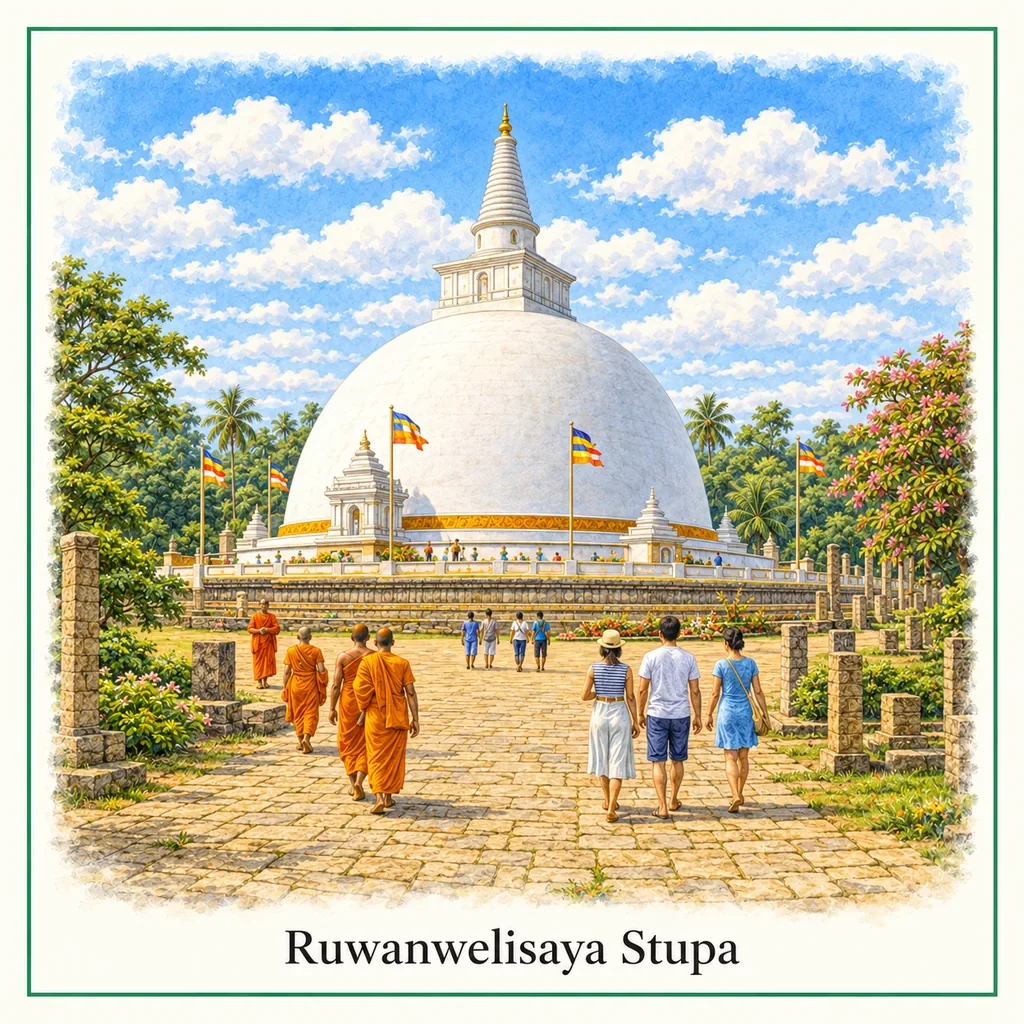
Ruwanwelisaya is an essential stop on a first visit to Anuradhapura. Originally commissioned by King Dutugemunu in the 2nd century BCE, the stupa remains an important place of worship. Its vast white dome and elephant-decorated boundary wall are striking, but the offerings and prayers around the monument give the visit its meaning.
Walk around the outer terrace respectfully, following local directions, and pause to notice the details rather than rushing to the next photograph. The present monument reflects centuries of repair and reconstruction, not an untouched original surface.
Best time: Early morning or late afternoon
Allow: 30–45 minutes
Beyond Path Asia tip: Combine this with Jaya Sri Maha Bodhi and Lovamahapaya. On full-moon Poya days, expect more pilgrims and allow extra time.
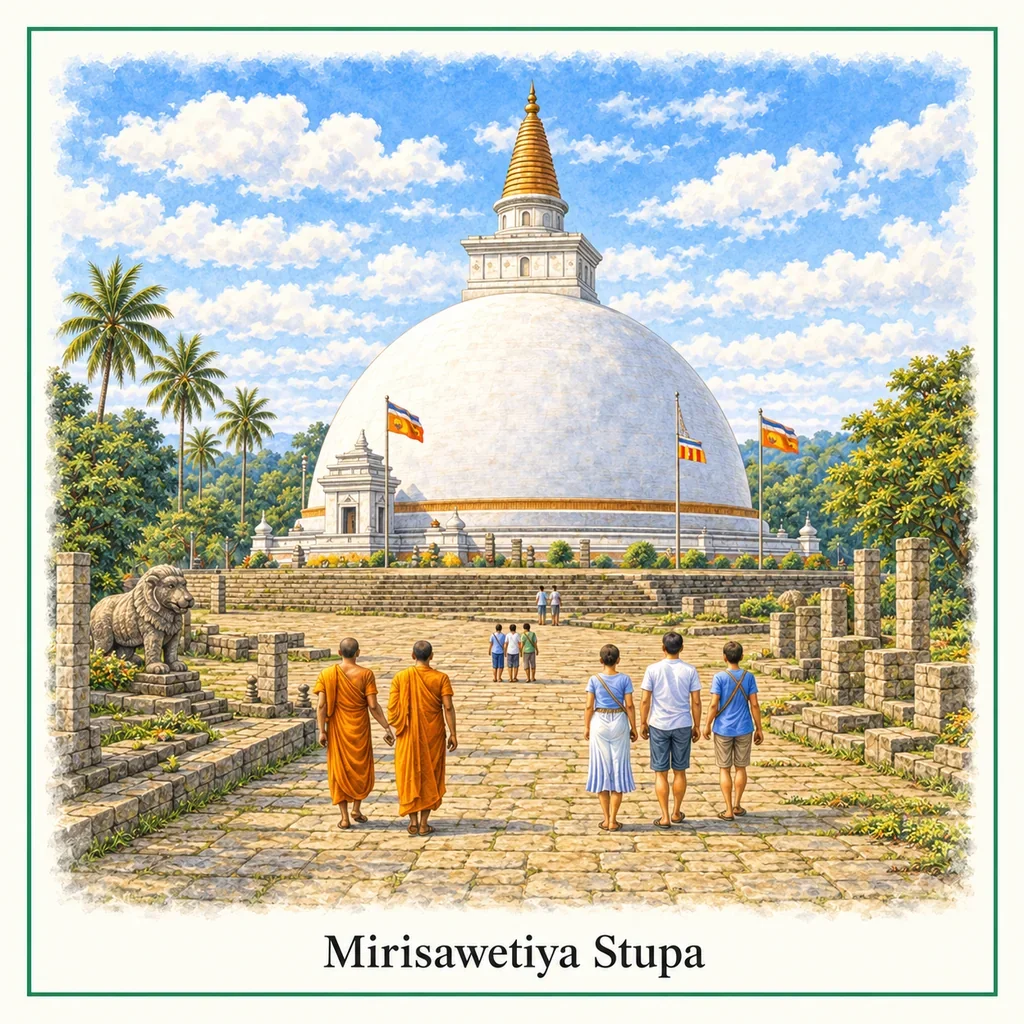
Mirisawetiya Stupa: a worthwhile stop near Tissa Wewa
Mirisawetiya, also written Mirisavetiya, is another major sacred stupa associated with King Dutugemunu in the 2nd century BCE. Its setting near Tissa Wewa makes it a useful addition to a route through the southern part of the Sacred City.
A local legend connects its name with the king eating a chilli dish without first sharing it with the monks. Treat this as a traditional story rather than a proven account. Today, the white stupa and surrounding monastic remains offer a quieter-looking contrast to the larger ceremonial spaces, although visitor numbers vary.
Best time: Morning or late afternoon
Allow: 20–30 minutes
Beyond Path Asia tip: Pair it with Isurumuniya and a stop beside Tissa Wewa instead of crossing the city for this sight alone.
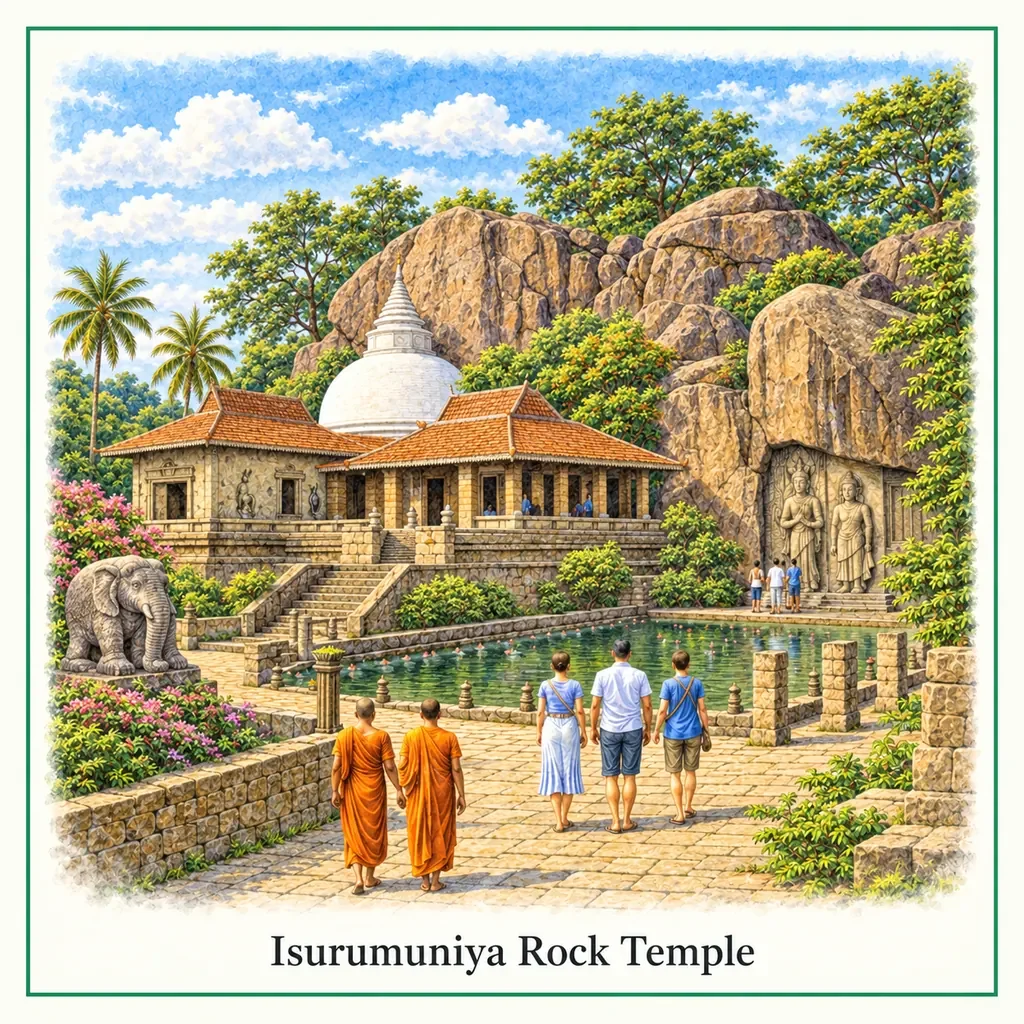
Isurumuniya Rock Temple: carvings, water and a rocky viewpoint
Isurumuniya offers a change of scale from Anuradhapura’s enormous stupas. This rock temple, close to Tissa Wewa, is known for its carved reliefs, including the figures popularly called the Isurumuniya Lovers, as well as elephant and horseman imagery.
Look closely at the carving details and the relationship between the rock, pond and shrines. Interpretations of the Lovers differ, so a guide can explain the main stories without presenting one identification as certain. Climb only where access is permitted; some surfaces and steps are uneven.
Best time: Earlier in the day, before the rock becomes hot
Allow: 30–45 minutes
Beyond Path Asia tip: Check the separate admission arrangements. If time allows, combine the temple with nearby Ranmasu Uyana, the ancient royal garden.
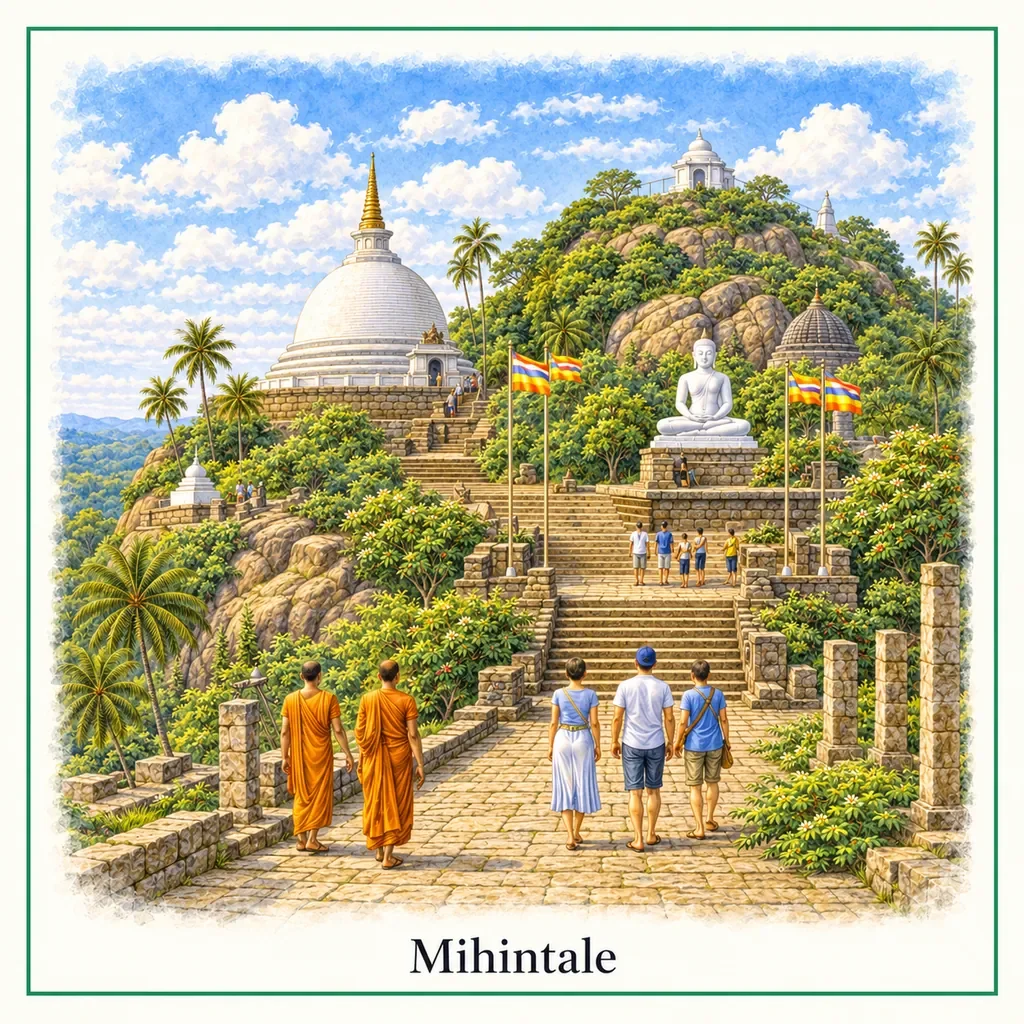
Mihintale: hilltop temples and views outside Anuradhapura
Mihintale is a separate excursion east of Anuradhapura, not another stop inside the central ruins. Buddhist tradition associates the hills with the meeting of the monk Mahinda and King Devanampiya Tissa in the 3rd century BCE, a key moment in the introduction of Buddhism to Sri Lanka.
The experience combines long stairways, monastic remains and hilltop shrines with broad countryside views. The final rocky viewpoints can be steep and exposed, and you do not need to climb every summit to appreciate the site.
Best time: Early morning or late afternoon, allowing a safe descent
Allow: Around 1.5–2.5 hours on site, plus travel
Beyond Path Asia tip: Arrange your return transport, carry water and check access and ticket arrangements locally. Skip exposed rock sections in wet or slippery conditions; with children, choose the climb to suit their confidence.
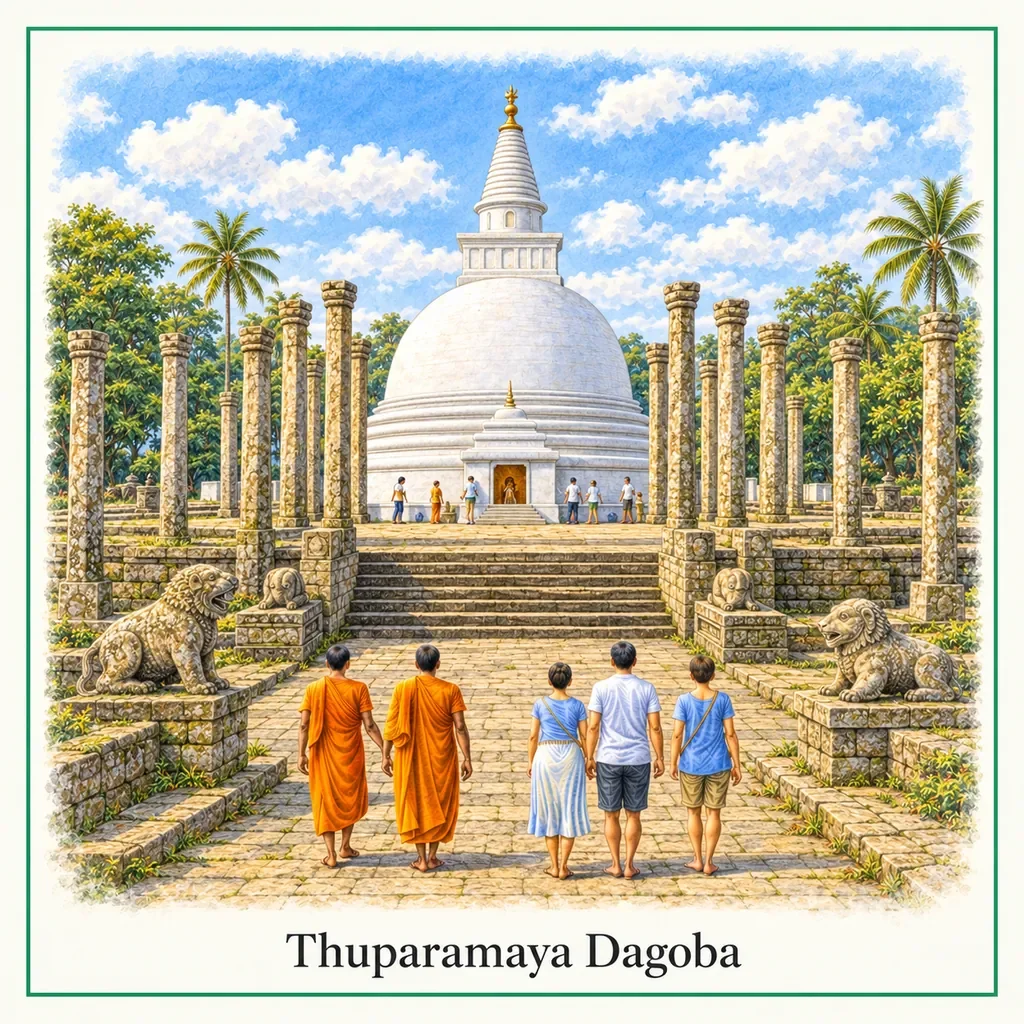
Thuparamaya Dagoba: an early landmark of Sri Lankan Buddhism
Thuparamaya is traditionally regarded as the first stupa built in Sri Lanka after Buddhism became the state religion. Its origins date to King Devanampiya Tissa’s reign in the 3rd century BCE, while the monument’s present appearance reflects later rebuilding.
The rows of stone columns around the stupa are a distinctive feature: they are associated with the circular structure that once sheltered it. This is a rewarding stop for understanding how sacred architecture changed over time, rather than judging the site by size alone.
Best time: Morning, alongside nearby sacred sites
Allow: 20–30 minutes
Beyond Path Asia tip: Combine it with Ruwanwelisaya. Respect worshippers and avoid touching or leaning on the ancient columns.
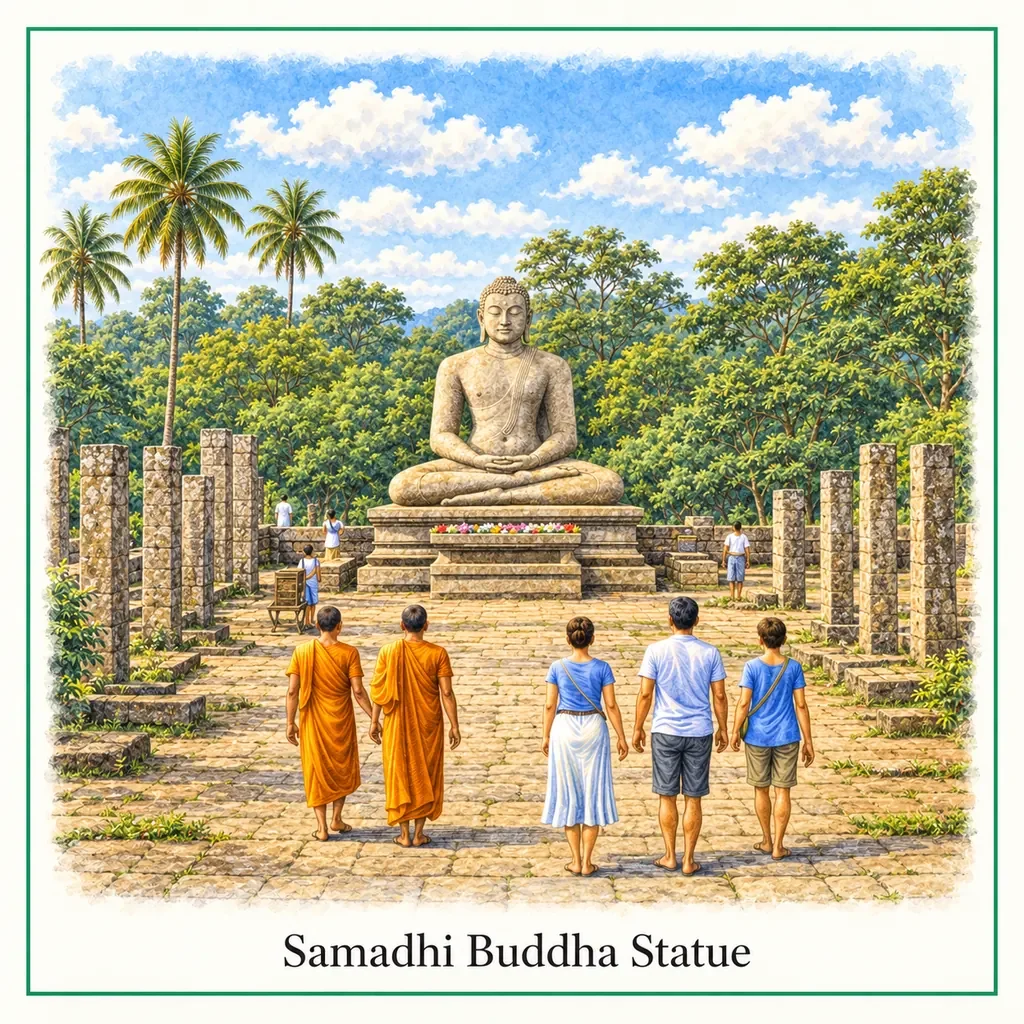
Samadhi Buddha Statue: a short stop for sculpture and stillness
The Samadhi Buddha is a seated image of the Buddha in meditation within the wider Abhayagiri area. The appeal is in the composition: lowered eyes, balanced posture and hands resting in a meditative gesture. It is worth slowing down to look at the sculpture rather than treating it as a quick photo stop.
The statue remains a sacred image. Keep your voice low, leave room for devotees and follow any signs or staff instructions about photography.
Best time: During your Abhayagiri circuit
Allow: 15–20 minutes
Beyond Path Asia tip: Combine the statue with Abhayagiri Stupa and the Twin Ponds; these nearby stops work better as one planned circuit than separate journeys.
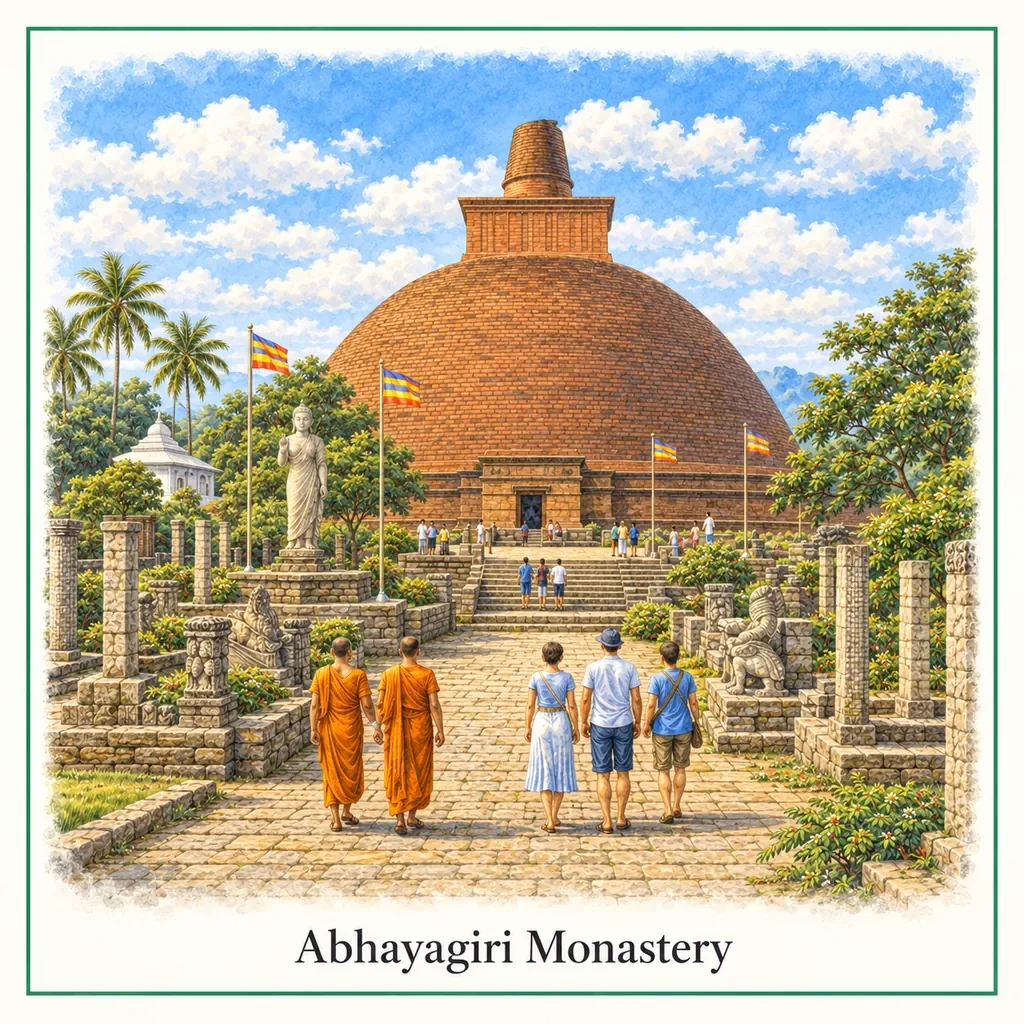
Abhayagiri Monastery: explore beyond the great stupa
Abhayagiri was a major monastic centre, founded in the 1st century BCE. Its enormous brick stupa is the obvious landmark, but the surrounding foundations, stairways and carved stonework reveal the scale of the community that once lived and studied here.
Give this area more time than a single monument. A guide can help distinguish residential buildings, ritual spaces and everyday infrastructure, turning scattered ruins into a more understandable monastic landscape.
Best time: Early morning, before the hottest part of the day
Allow: Around 1–2 hours for a selected circuit including nearby stops
Beyond Path Asia tip: Link Abhayagiri with the Samadhi Buddha, Twin Ponds and Ratnaprasada. Ask your guide to include a moonstone and guard stone rather than only the largest buildings.
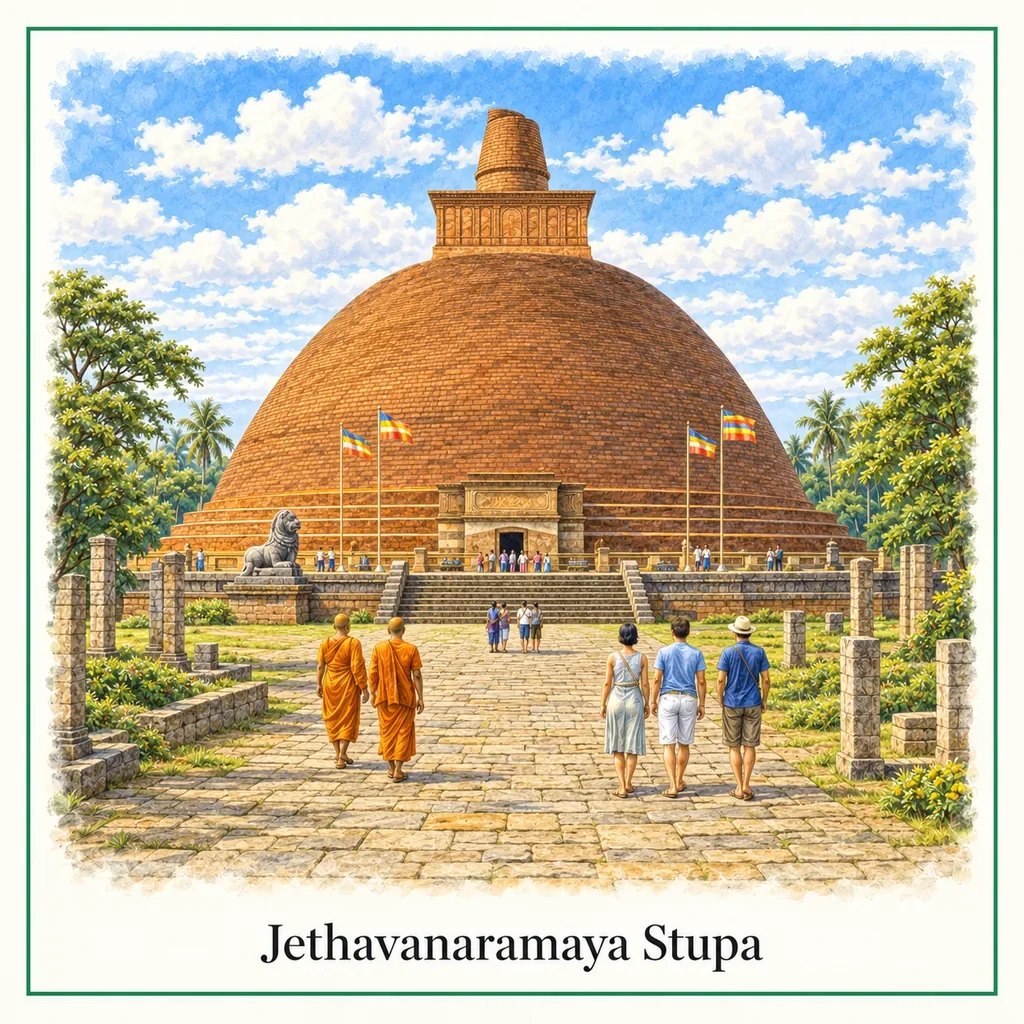
Jetavanaramaya Stupa: appreciate the scale of ancient brickwork
Jetavanaramaya — also spelled Jethavanaramaya — dates to the 3rd century CE and the reign of King Mahasena. The immense brick structure was the centrepiece of a large monastery and remains one of Anuradhapura’s most impressive sights for anyone interested in architecture and engineering.
Step back to appreciate the breadth of the base, then examine the brickwork and surrounding remains. Its exposed-brick appearance does not mean it has escaped conservation: the Central Cultural Fund has carried out restoration work here.
Best time: Early morning or later in the afternoon
Allow: 30–45 minutes
Beyond Path Asia tip: There is limited relief from the heat in exposed areas. Carry water and use transport between this complex and more distant sights.
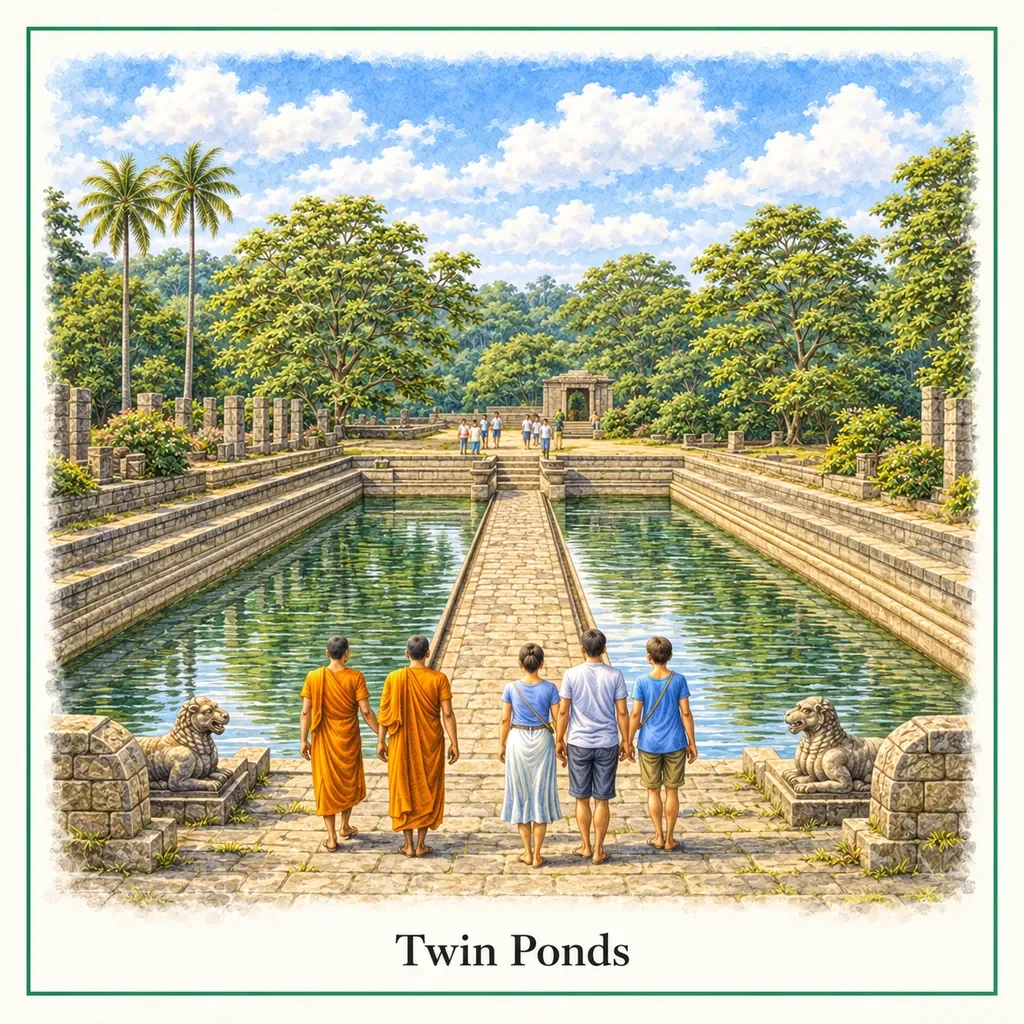
Twin Ponds (Kuttam Pokuna): carved stone and water engineering
The Twin Ponds are two stone-built bathing pools associated with the Abhayagiri monastery. Their stepped sides, carved details and water-management features show a different side of the ancient city: the infrastructure that supported monastic life.
Look at the proportions and stonework of each pool rather than expecting two identical basins. These are archaeological remains, not swimming pools; stay on permitted paths and keep off fragile edges.
Allow: Around 20–30 minutes, as part of your Abhayagiri circuit.
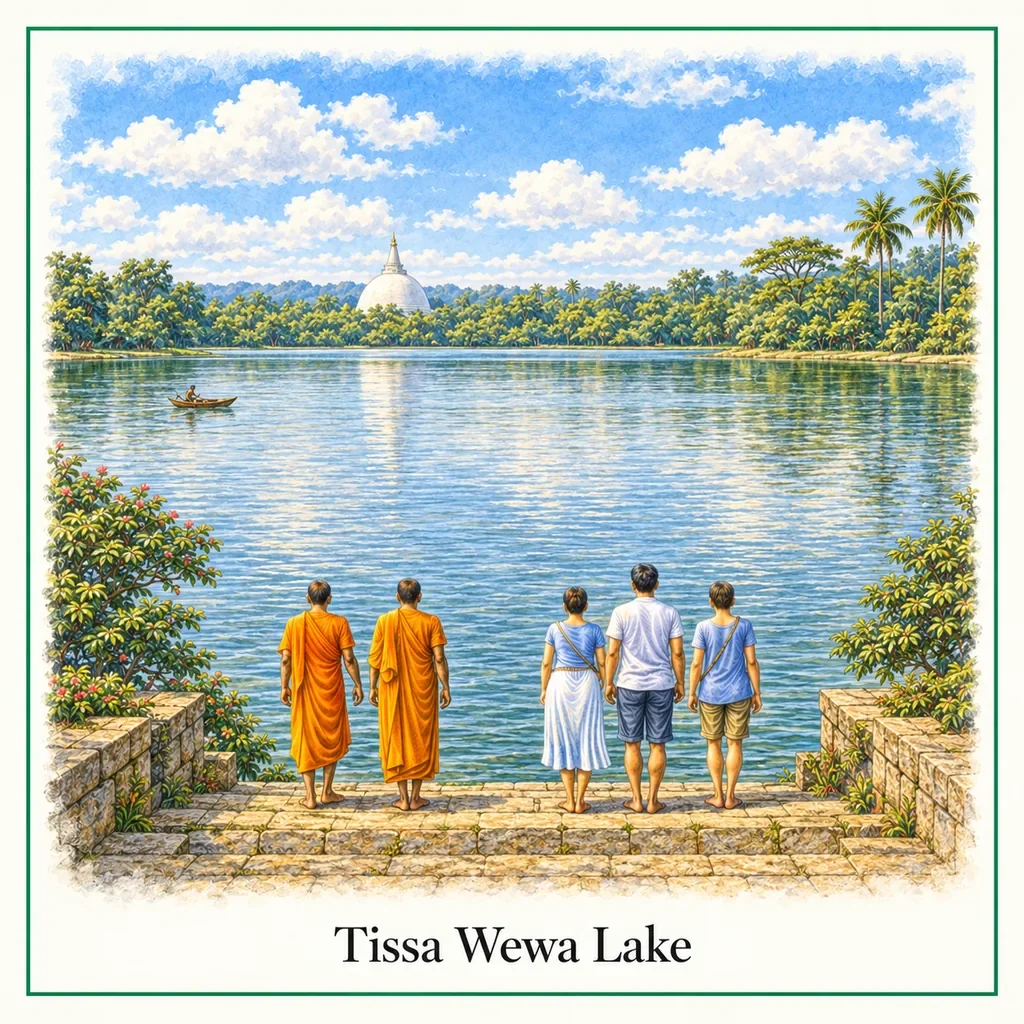
Tissa Wewa: take a lakeside break between temple visits
Tissa Wewa is an ancient man-made reservoir, part of the water system that helped sustain Anuradhapura. A short stop beside the water adds landscape and everyday life to a day otherwise dominated by monuments.
Plan your visit: Allow 20–30 minutes in the cooler late afternoon. Combine it with Isurumuniya or Mirisawetiya, use accessible public paths and avoid treating the reservoir as a swimming spot.
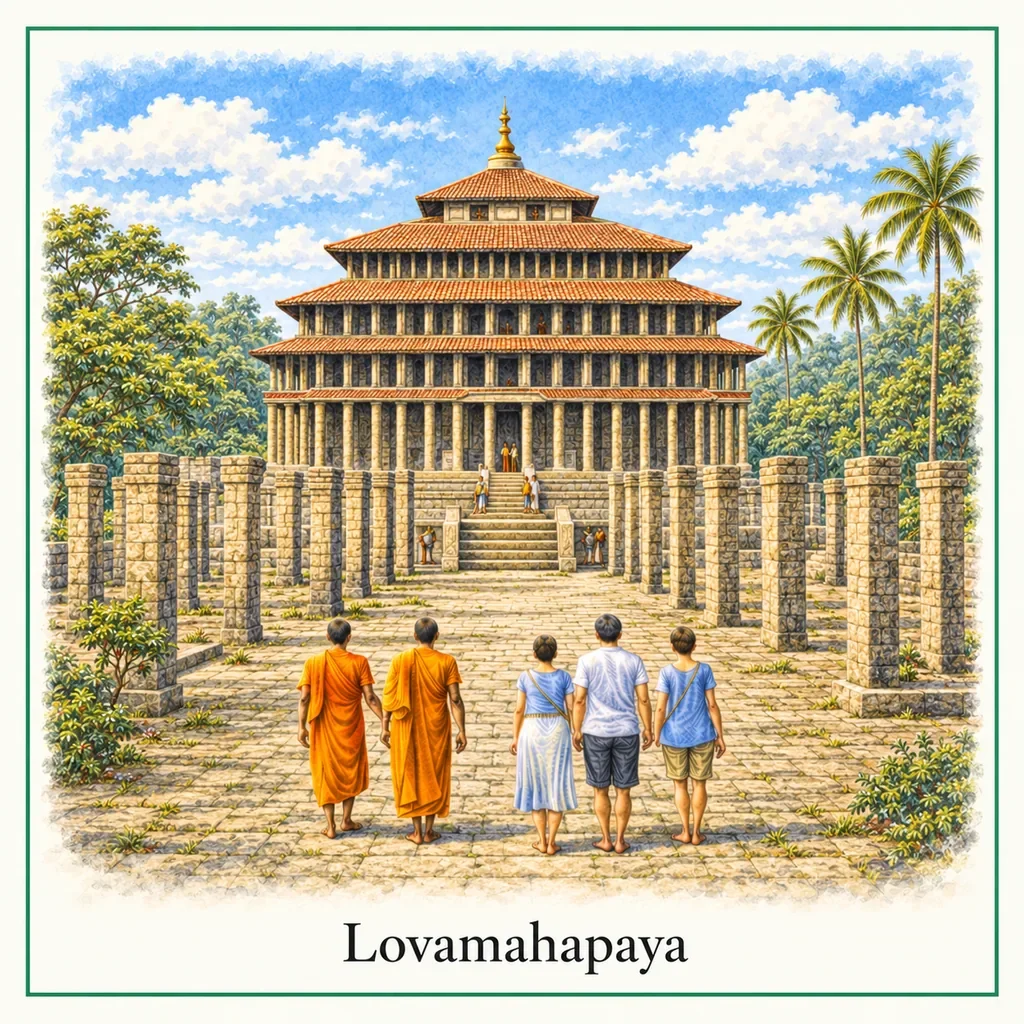
Lovamahapaya: the stone pillars of the Brazen Palace
Lovamahapaya lies between Jaya Sri Maha Bodhi and Ruwanwelisaya. Despite its English name, the Brazen Palace was a monastic building rather than a royal residence; the name refers to its former metal-covered roof. Rows of stone pillars mark the footprint of a much larger structure.
Plan your visit: Allow 10–15 minutes as you move between the nearby shrines. View the remains from permitted areas; this is a quick contextual stop rather than a site to build your day around.
Connect the sights instead of doubling back
Visit Jaya Sri Maha Bodhi, Lovamahapaya and Ruwanwelisaya together. Keep Isurumuniya, Mirisawetiya and Tissa Wewa as another convenient group. This makes the day easier to manage and leaves more time for the places that interest you most.
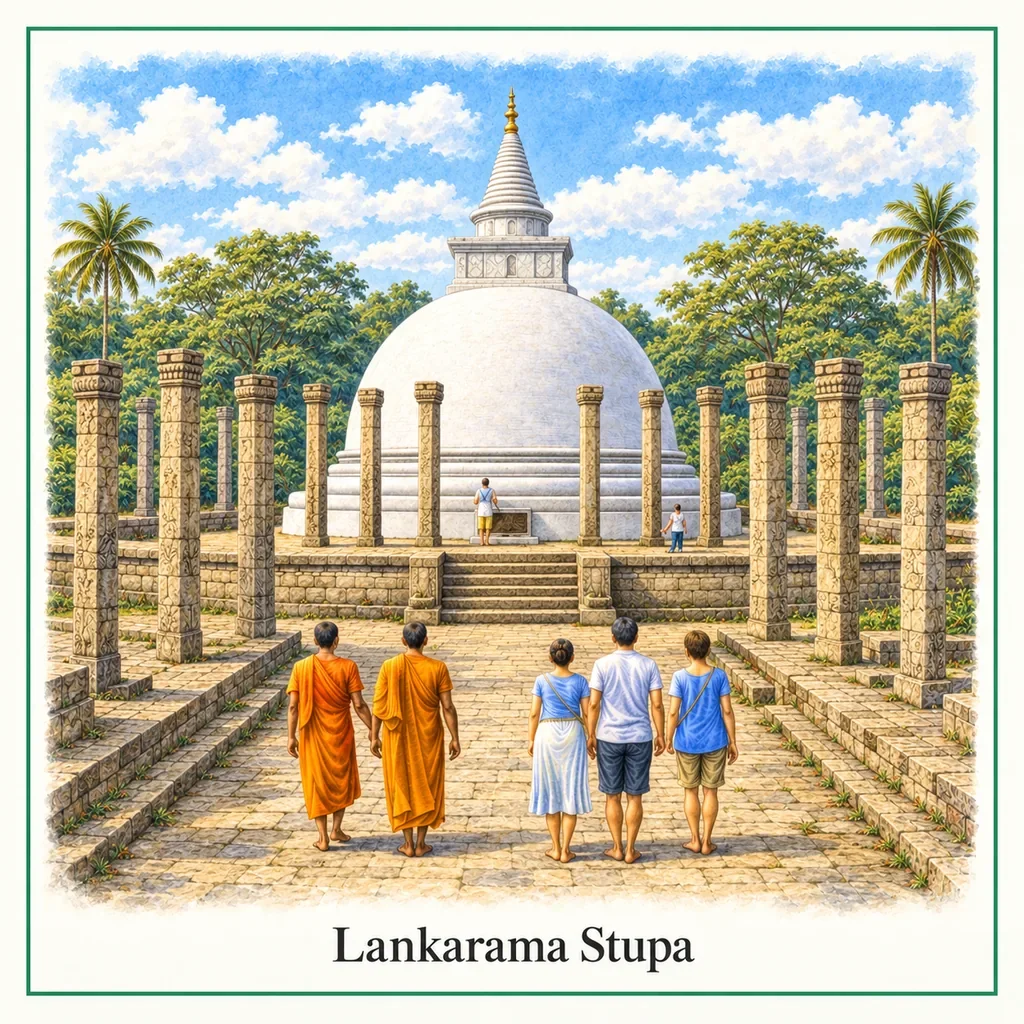
Lankarama Stupa: a smaller shrine with distinctive columns
Lankarama offers another perspective on Anuradhapura’s sacred architecture. The small white stupa is encircled by surviving stone columns from the circular structure that once sheltered it. Its present form includes later reconstruction, so the value lies in the combination of the shrine and its architectural remains.
Plan your visit: Allow 15–20 minutes if you are already exploring the Abhayagiri area. It is an optional addition when time is limited.
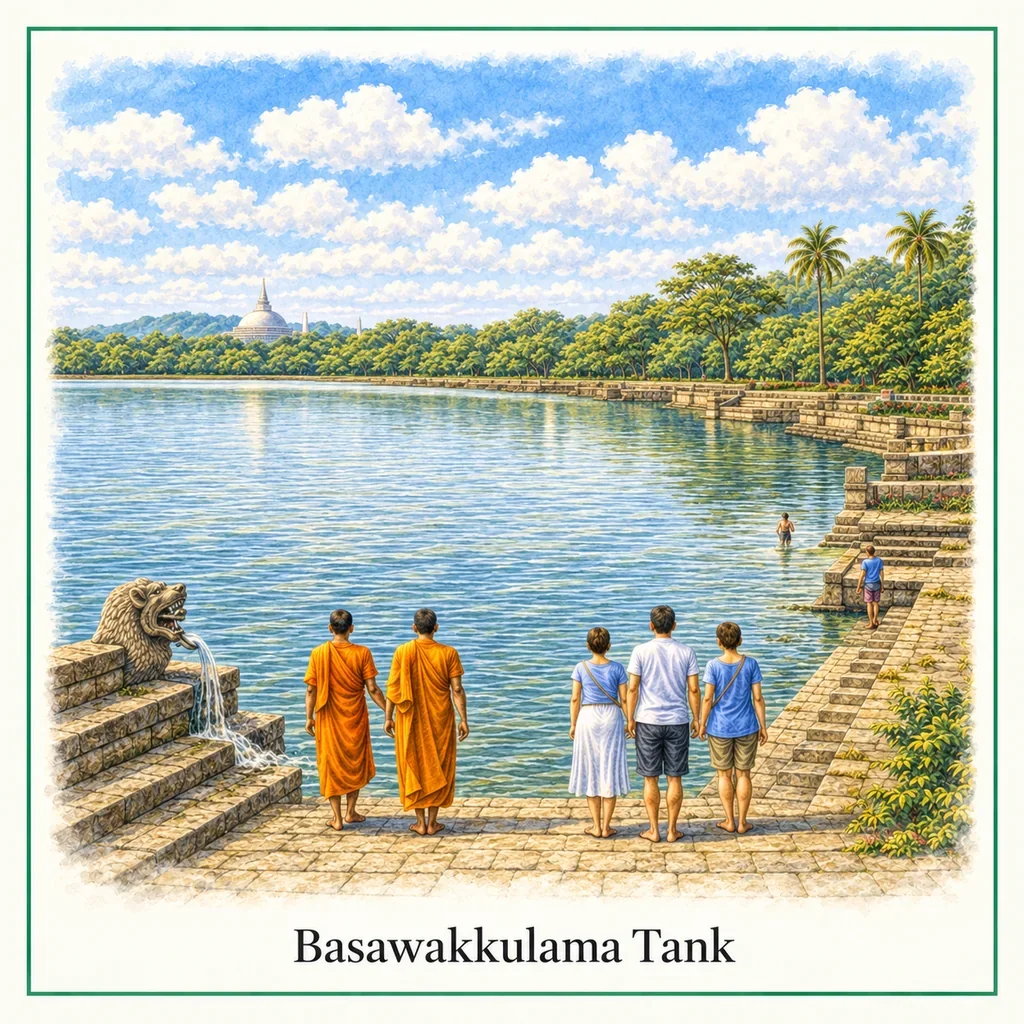
Basawakkulama Tank (Abhaya Wewa): see the city’s reservoir landscape
Basawakkulama is one of Anuradhapura’s ancient reservoirs, close to the central sacred sites. A brief lakeside stop helps explain how water storage supported such a large settlement in Sri Lanka’s dry zone.
Plan your visit: Allow 15–20 minutes in cooler light. Keep to public access areas, respect people using the water and do not disturb birds or other wildlife.
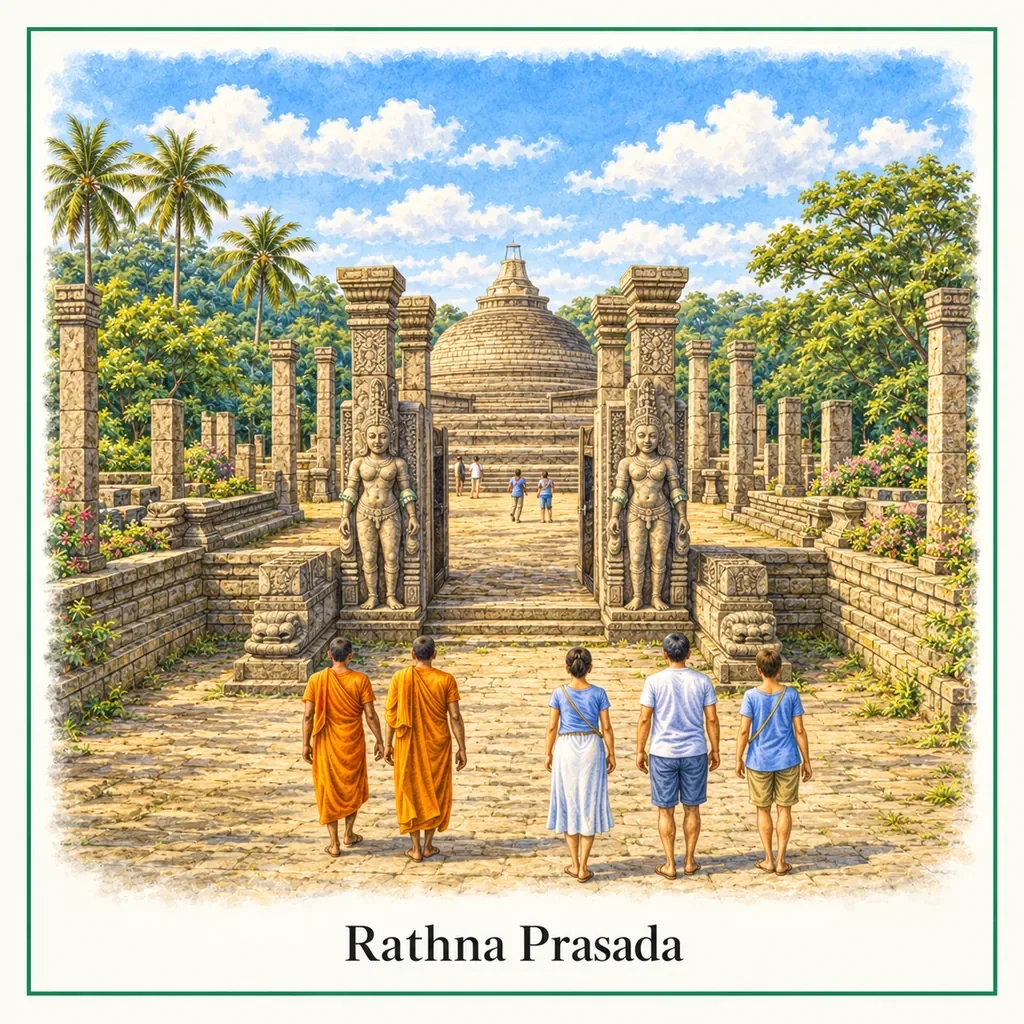
Ratnaprasada: look closely at Anuradhapura’s guard stones
Ratnaprasada, also written Rathna Prasada, forms part of the wider Abhayagiri complex. Its remains are especially rewarding for carved detail, including the elaborate guard stone by the entrance. These protective figures and decorated thresholds show how architecture communicated meaning as well as function.
Plan your visit: Allow 15–20 minutes during your Abhayagiri circuit. A guide can point out the motifs and explain different interpretations without turning every symbol into a certainty.
Beyond the monuments: make room for everyday Anuradhapura
Leave time for a rice-and-curry lunch, a market stop or a shaded break before returning to the temples. Ask before photographing people and observe rituals from a respectful distance. For help putting the sights into a manageable order, see our two-day Anuradhapura itinerary.
Planning note: Suggested visit lengths are our estimates, not official opening times. Check local access, tickets and conditions before setting out.

Anuradhapura itinerary: a manageable two-day route
This plan assumes two full sightseeing days, with a tuk-tuk or driver between the main areas. Timings are suggestions: leave room for heat, worshippers and the places that interest you most. Confirm ticket coverage before setting out.
Day 1: sacred sites and the southern lakeside
Early morning: Start at Jaya Sri Maha Bodhi, continue past Lovamahapaya’s stone pillars and visit Ruwanwelisaya. Add nearby Thuparamaya if you have the energy. This group gives you a strong introduction without repeatedly crossing the city.
Midday: Have lunch in town and take a proper break at your accommodation. Avoid scheduling a long, exposed walk through the hottest hours.
Late afternoon: Choose Isurumuniya and nearby Ranmasu Uyana, or Mirisawetiya and a short stop beside Tissa Wewa. Choose one combination instead of squeezing in every southern sight.
Day 2: Abhayagiri and a separate Mihintale excursion
Early morning: Explore a selected circuit around Abhayagiri, including the Samadhi Buddha, Twin Ponds and carved details at Ratnaprasada. Add Jetavanaramaya only if your pace and transport allow; otherwise swap it for one of the smaller stops.
Midday: Return for lunch, water and shade. A short market visit is an option if you prefer to stay in town.
Late afternoon: Travel separately to Mihintale. Allow around 1.5–2.5 hours on site, plus the drive in both directions. Arrange your return pickup and leave enough daylight for the descent. Skip exposed rock sections when wet, or choose a shorter visit if the steps feel too demanding.
Only one day, or arriving at lunchtime?
With one full day, prioritise Jaya Sri Maha Bodhi, Ruwanwelisaya and either the Abhayagiri circuit or Jetavanaramaya. Keep Mihintale for a separate visit if possible. On an arrival afternoon, choose a small nearby group of sights rather than treating it as a full sightseeing day.
Adding a safari? Give Wilpattu National Park its own day, or stay near the park before or after Anuradhapura. It is more rewarding than squeezing a safari into an already full temple itinerary.
Where to stay in Anuradhapura
Choose your location before comparing room facilities. Hotels around Tissa Wewa offer a useful base for the Sacred City, while accommodation in the modern town is convenient for restaurants and transport. Rural resorts suit travellers who want more time at the property and are happy to arrange transfers.
Allow at least one full sightseeing day; two full days make room for Mihintale and slower exploring. A pool or shaded garden is useful for midday breaks. Check the exact location, meal options and transfer arrangements before booking.
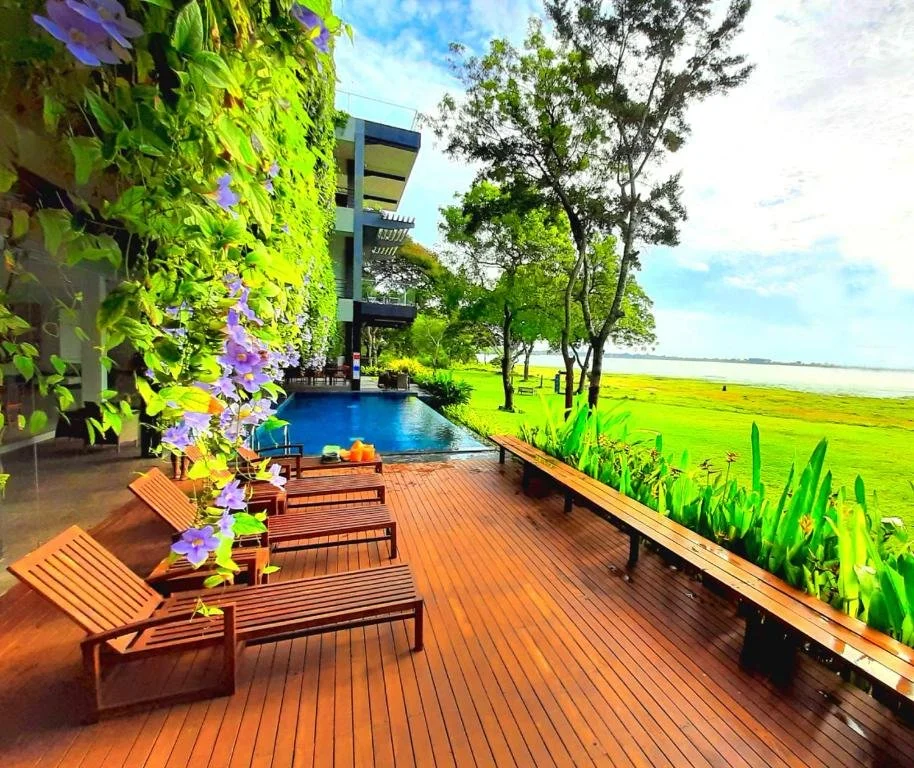
The Lake Forest Hotel
BEST FOR LOCATION AND LAKE VIEWS
The Lake Forest Hotel offers a peaceful setting beside Tissa Wewa while keeping the Sacred City within easy reach. Its combination of lake views, comfortable rooms and a swimming pool makes it a practical base for sightseeing without sacrificing atmosphere. It is particularly suitable for first-time visitors who want to stay close to Anuradhapura’s major historic sites.
Best for: First-time visitors, couples and sightseeing
Location: Near Tissa Wewa and the Sacred City
Price level: €€€
✓ Peaceful lakeside setting
✓ Swimming pool
✓ Convenient for visiting the ancient city
Keep in mind: The immediate surroundings are quiet, so most restaurants and attractions require a tuk-tuk or driver.
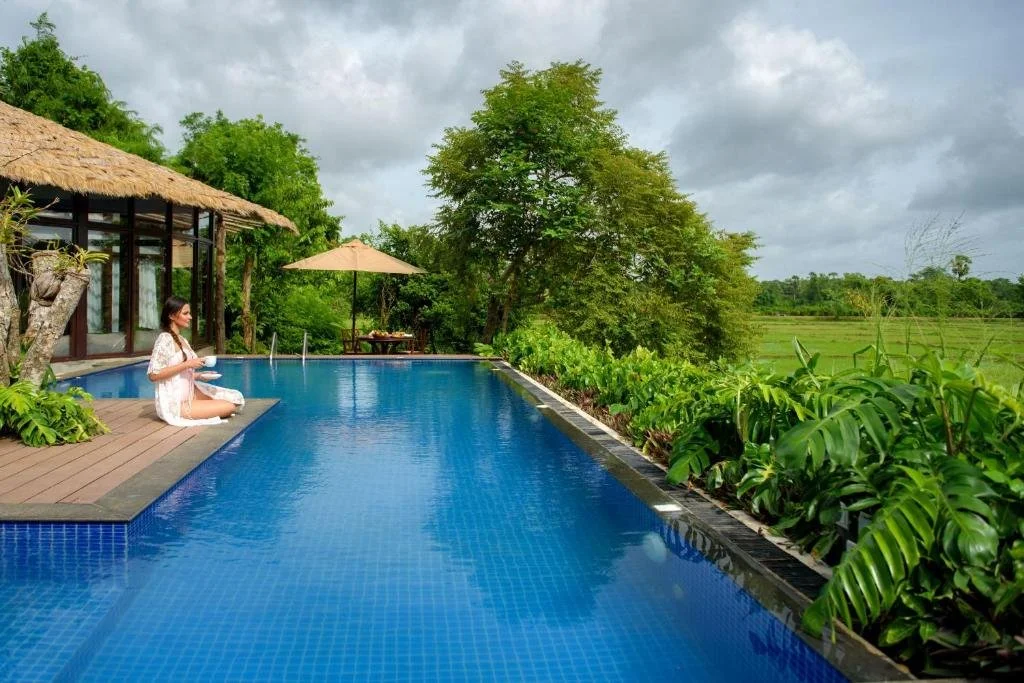
Uga Ulagalla
BEST LUXURY AND NATURE RETREAT
Uga Ulagalla is set on a large rural estate surrounded by rice fields, forest and wildlife. Its spacious villas have private plunge pools and terraces, offering considerably more privacy than hotels in central Anuradhapura. The natural setting, spa and range of on-site experiences make this a destination in itself rather than simply a place to sleep.
Best for: Luxury, privacy, couples and special occasions
Location: Countryside outside Anuradhapura
Price level: €€€€
✓ Private pool villas
✓ Peaceful natural setting
✓ Spa, dining and on-site experiences
Keep in mind: The resort is outside the city, so allow additional travel time when visiting the Sacred City.
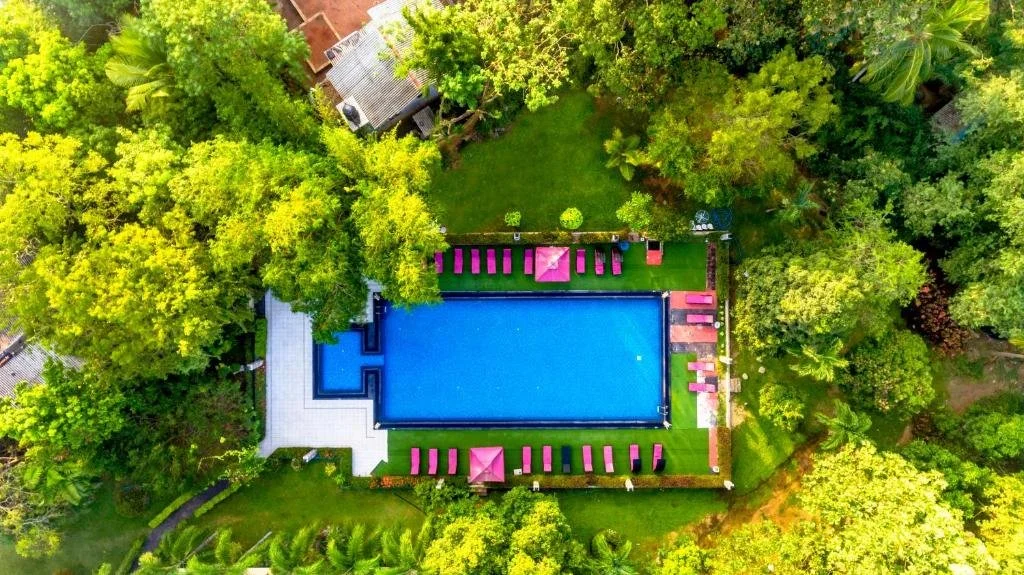
Heritage Hotel Anuradhapura
BEST FOR FAMILIES
Heritage Hotel is a comfortable family-friendly option with extensive gardens, spacious accommodation and swimming facilities for adults and children. There is plenty of space to relax after exploring the temples, while its position near Tissa Wewa keeps the main cultural attractions within easy reach.
Best for: Families, longer stays and relaxed afternoons
Location: Near Tissa Wewa
Price level: €€
✓ Family-friendly rooms
✓ Large gardens
✓ Swimming pools, including a children’s pool
Keep in mind: The hotel is better suited to travelers looking for space and facilities than for an intimate boutique atmosphere.
More recommended places to stay
Rajarata Hotel
BEST VALUE WITH A POOL
A practical and affordable hotel close to central Anuradhapura, with spacious rooms and an outdoor pool. A good option for travelers looking for comfort without moving into the luxury price range.
Best for: Value and short stays · Price: €€
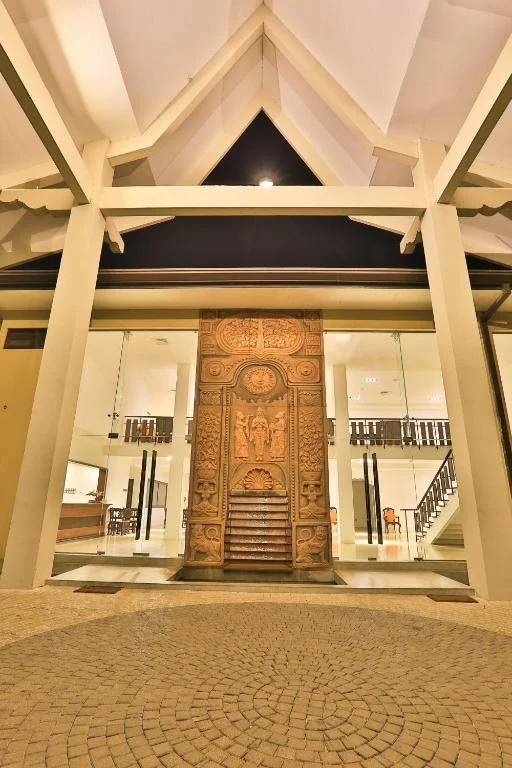
Hotel Alakamanda
BEST QUIET MID-RANGE STAY
A peaceful hotel with a garden, swimming pool and on-site restaurant outside the busiest part of Anuradhapura. It offers a relaxed base at a moderate price.
Best for: Couples and families seeking tranquility · Price: €€
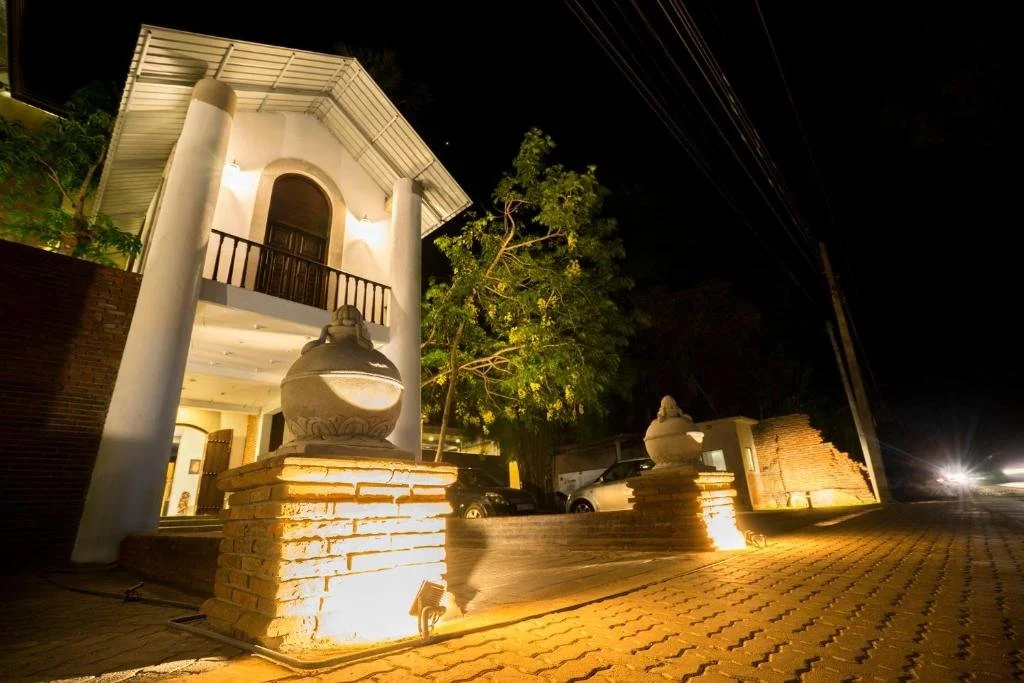
Kaala Kalaththewa Luxury Eco Resort
BEST SMALL-SCALE NATURE STAY
A secluded resort surrounded by tropical greenery, with a swimming pool and a quiet, nature-focused atmosphere. Best suited to travelers with their own driver or arranged transport.
Best for: Nature and boutique-style stays · Price: €€€
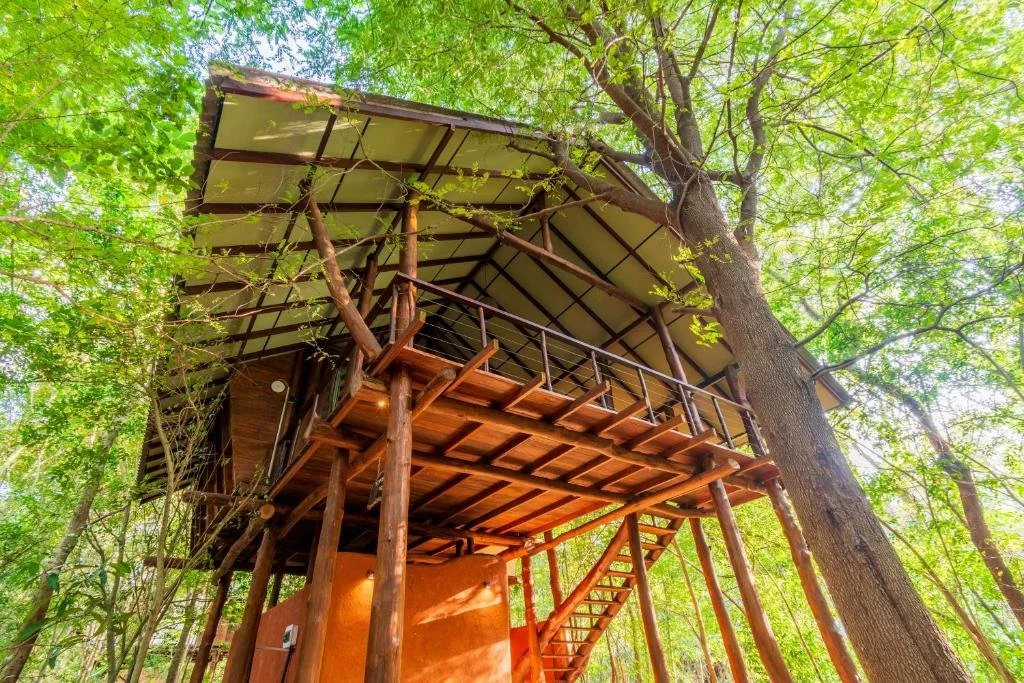

Essential travel tips for Anuradhapura
Start early and plan a midday break. Distances and exposed temple grounds make sightseeing tiring even with transport. Carry water, sun protection and a small day bag.
Dress for active places of worship. Cover shoulders and knees. Remove footwear and hats where required, follow signs and staff instructions, and carry socks for hot paving where permitted.
Check what your ticket includes. The archaeological ticket does not automatically cover every temple, Mihintale or a guide. Confirm inclusions, carry cash for separate charges and keep your tickets with you. See the official Central Cultural Fund prices.
Agree on transport and guiding separately. Confirm the route, duration, pickup, waiting time and total price. A driver is not necessarily a specialist historical guide.
Give worshippers space. Ask before photographing people, follow photography restrictions and avoid interrupting offerings or prayers. Stay off fragile ruins and carved stonework.
Match the route to your group. Uneven paths, barefoot sections and Mihintale’s steps can be challenging. With young children or limited mobility, choose fewer stops and arrange transport close to permitted entrances.
Keep food and belongings secure around monkeys. Do not feed wildlife or approach it for photographs.
Allow extra time on pilgrimage days. Full-moon Poya days and the Poson period can bring large numbers of worshippers. Expect busier roads and sacred sites.
Beyond Path Asia tip: Choose the sights you most want to understand, then group nearby stops. A shorter route with time to look closely is often more rewarding than a long checklist.

Where to eat in Anuradhapura
Plan lunch around your sightseeing route and keep evenings simple if your hotel is outside town. Rice and curry is a good starting point for local food; kottu and other cooked-to-order dishes add variety. Ask what is available that day rather than expecting every dish at every mealtime.
Seedevi Family Restaurant: a broad menu in town
Seedevi’s published menu includes kottu, vegetable dishes, rice dishes and Indian options. The variety makes it a practical place to consider when your group wants different meals. Check the restaurant’s own website for its menu and location, and confirm current opening hours before making a special journey.
Uga Ulagalla: a planned resort dining experience
Outside the city, Uga Ulagalla offers Liyawela restaurant and the Kamatha dining experience in a working paddy-field setting. Treat this as a separate outing rather than a quick stop between temples. If you are not staying at the resort, contact it first about access, reservations, availability and the total price. See Uga Ulagalla’s dining options.
Local rice-and-curry kitchens and guesthouse dinners
Ask your accommodation for a nearby kitchen serving freshly prepared rice and curry, or whether it can arrange dinner with advance notice. Check the price, dishes and serving time before ordering. This is especially useful when staying away from the town’s restaurants.
Vegetarian or vegan? Ask specifically about fish stock, dried fish or Maldive fish in curries and sambols, as well as egg and dairy where relevant. Our vegetarian food guide to Sri Lanka explains useful ordering questions.

How to get to Anuradhapura
Anuradhapura is a useful stop between Colombo or Negombo, Wilpattu and the Cultural Triangle. Choose transport around your starting point and onward route, and avoid planning a full sightseeing programme immediately after a long transfer.
By train from Colombo
Look for Colombo Fort–Anuradhapura services in the official Sri Lanka Railways timetable. Check the service for your date, journey duration and arrival station; timings vary by train and operational conditions. Where available, book a reserved seat through the official seat-reservation service. Arrange a tuk-tuk from the station to your accommodation.
By car or private driver
A private transfer offers flexibility from Colombo, Negombo or the airport, particularly with luggage or children. Ask for a current door-to-door estimate and a total quote covering any planned stops. Traffic, weather and your exact hotel location can change the journey considerably.
By bus
Ask locally about the current service, departure terminal, route and final stop. Bus travel can suit a tighter budget, but allow extra time for connections and check luggage arrangements before boarding.
From Sigiriya, Dambulla, Polonnaruwa or Wilpattu
A road transfer is usually the simplest way to connect these destinations without returning to Colombo. Agree on the route and any sightseeing stops in advance. If travelling on to Jaffna, compare the current train services with a road transfer.
Once you arrive: The station, modern town and Sacred City are separate parts of a spread-out destination. Plan local transport even if your hotel is described as being “in Anuradhapura”.
Best time to visit Anuradhapura
Anuradhapura is hot throughout the year. Plan outdoor visits early, allow a shaded midday break and check the forecast for your dates. Seasonal patterns help with planning, but they do not guarantee dry weather.
May to September: generally drier, still hot
This is a practical period for exploring the outdoor ruins. Do not mistake the drier season for cool sightseeing weather: use transport between distant sites, carry water and keep your route manageable.
October to December: allow for the wetter season
This is the main wetter part of the year in Anuradhapura. Rain can affect exposed ruins, cycling and Mihintale’s steps, so leave flexibility in your itinerary. December should not be treated as a reliably dry month.
January to April: check conditions and plan around heat
Conditions vary as the wetter season eases. February and March can offer useful sightseeing windows, while heat and later-season showers still need consideration. Keep early starts and rest breaks in your plan in every month.
Pilgrimage dates matter too: Full-moon Poya days and Poson celebrations bring a different atmosphere and potentially busy sacred sites. Confirm the dates for your travel year and book ahead when visiting during a major festival.
For current conditions, consult the Sri Lanka Department of Meteorology. For a wider route, see our April–November Sri Lanka itinerary.

Hidden gems and details to notice
Anuradhapura becomes more interesting when you look beyond the largest stupas. Leave space for carved thresholds, water engineering and smaller stops along your route.
Ranmasu Uyana’s gardens and bathing pools
Near Isurumuniya and Tissa Wewa, the ancient royal gardens offer another view of the city’s relationship with water. Look for the rock setting and surviving pool structures. Add the gardens when you are already in this southern area rather than making a separate crossing of the city.
Moonstones and guard stones around Abhayagiri
Carved entrance stones reward a closer look. Ask a guide to show how the designs differ and explain the main interpretations; the meaning of every animal or motif is not equally certain. Ratnaprasada is a worthwhile stop for its elaborate guard stone.
Reservoirs as part of the city’s story
Tissa Wewa and Basawakkulama are more than scenic breaks. These ancient reservoirs help explain how water storage supported a major settlement in the dry zone. Observe from permitted public access points and respect people using the water.
A living sacred city
Jaya Sri Maha Bodhi’s history reaches back to a cutting brought from India in the 3rd century BCE. The offerings and pilgrimages around it show why Anuradhapura is still a place of devotion, as well as an archaeological destination.
Anuradhapura travel FAQ
-
Visit for vast stupas, monastic ruins and living Buddhist traditions around Jaya Sri Maha Bodhi. The UNESCO-listed Sacred City is especially rewarding if you enjoy history and architecture. Allow time to explore a few areas carefully rather than rushing between every monument.
-
Start with Jaya Sri Maha Bodhi and Ruwanwelisaya, then choose the Abhayagiri circuit or Jetavanaramaya. Mihintale is a separate excursion outside the city. Our two-day itinerary shows how to group the sights.
-
Anuradhapura combines a large sacred landscape with active pilgrimage sites. Polonnaruwa offers another ancient capital with a different collection of ruins, while Sigiriya centres on the rock fortress and surrounding countryside. With limited time, choose according to your interests and route rather than treating them as interchangeable stops.
-
Allow one full day for selected highlights, or two full days for a less rushed visit including Mihintale. Two nights work if your arrival and departure leave enough time; three nights make two full days easier. See our two-week and three-week Sri Lanka itineraries for route ideas.
-
May to September is generally drier, but remains hot. October to December is the main wetter period; December is not reliably dry. Check the forecast, start early and take a midday break in every season. Read the seasonal planning advice for more detail.
-
Yes, with a shorter route, shade breaks and transport between distant stops. A tuk-tuk or driver may be easier than cycling with young children. At Mihintale, choose steps and viewpoints to suit your children’s confidence and the conditions. See our Sri Lanka with kids guide.
-
A tuk-tuk or driver is practical for the spread-out sites. Cycling can work for confident riders who start early and limit their route. Confirm transport, waiting time and guiding separately: a driver is not automatically a historical guide. Walking works best within small groups of nearby sights.
-
Look for vegetable curries, dhal and cooked-to-order dishes, but ask about fish stock, dried fish or Maldive fish in curries and sambols. Vegans should also check egg and dairy. Our vegetarian food guide explains useful questions to ask when ordering.
-
Look around Tissa Wewa for access to the Sacred City, or the modern town for restaurants and transport. Rural resorts offer more space but require transfers. Compare exact locations, meal options and facilities in our Where to stay section.
-
Wear clothing that covers shoulders and knees. Remove shoes and hats where required, and follow local signs and staff instructions. Carry socks for hot paving where permitted, and choose footwear that is easy to remove. Give worshippers space and ask before photographing people.
-
Do not assume so. The Central Cultural Fund archaeological ticket does not automatically include every active temple, Mihintale, transport or a guide. Check the official CCF prices and confirm inclusions before paying. Keep your tickets with you; separate charges or donation arrangements may apply elsewhere.
-
Combine the city with Sigiriya, Dambulla or Polonnaruwa for a cultural route. Add Wilpattu National Park with its own safari day, or continue north to Jaffna. Avoid fitting every destination into a short stay.
Where to go after Anuradhapura
Build your next stop around the time you have and the experiences you want to add:
Sri Lanka Cultural Triangle guide — compare the region’s ancient cities and temples.
Sigiriya travel guide — plan Lion Rock and the surrounding countryside.
Dambulla travel guide — explore the cave temples and connect nearby cultural stops.
Polonnaruwa travel guide — add another ancient capital to your route.
Wilpattu National Park guide — give a wildlife safari its own day.
See how these stops fit together in our two-week and three-week Sri Lanka itineraries.
More Sri Lanka inspiration