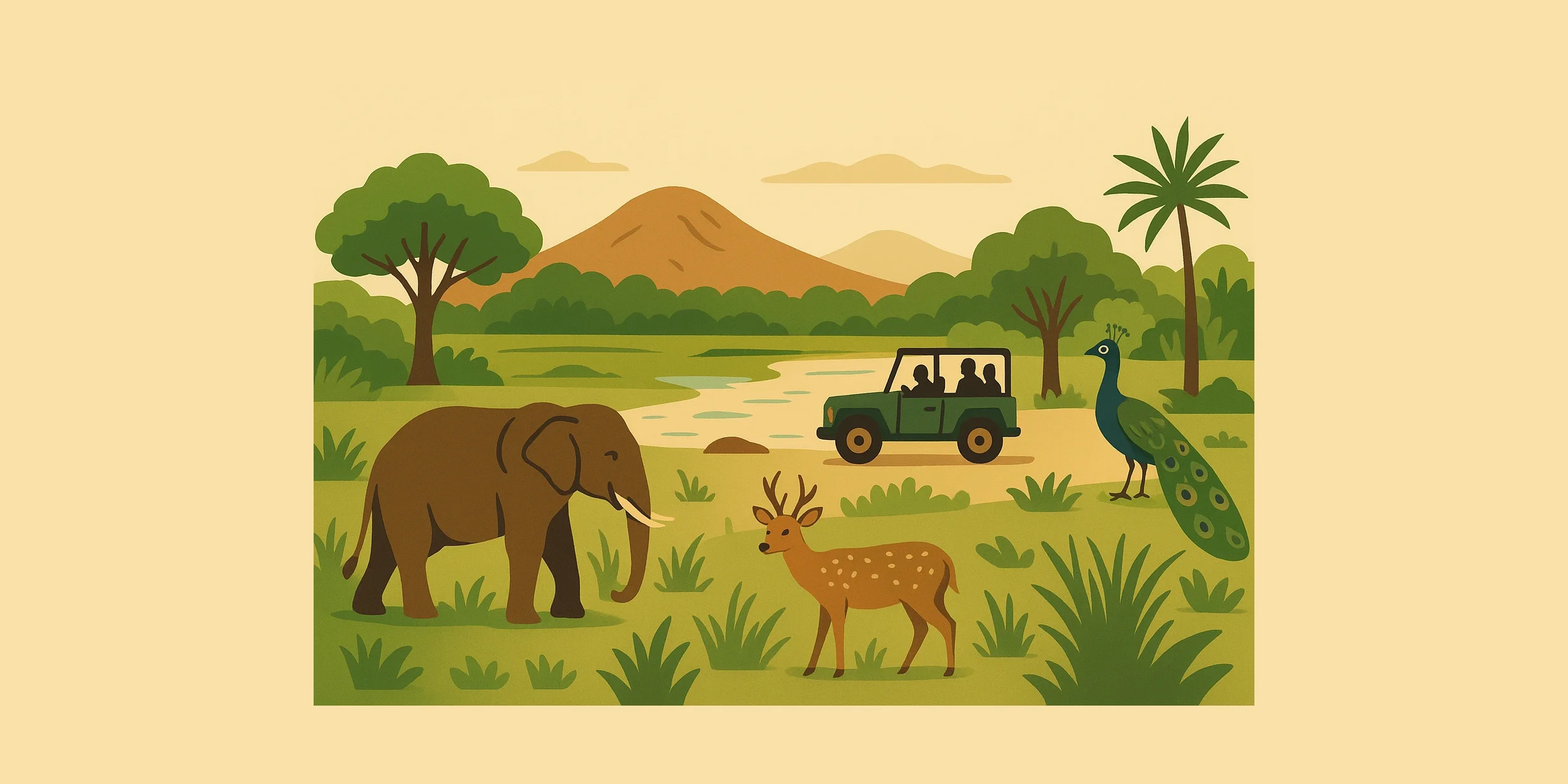
Wilpattu National Park
Untamed wilderness & quiet safaris

Why visit Wilpattu National Park?
Wilpattu’s forest tracks open onto natural lakes known as villus, creating a distinctive safari landscape in northwest Sri Lanka. Leopards and sloth bears are among its elusive residents, while deer, crocodiles and birdlife give you plenty to watch along the way.
Choose Wilpattu for patient wildlife watching and a forest-and-wetland setting. Stay one or two nights near your chosen entrance rather than treating it as a rushed stop. It pairs well with Anuradhapura; no visit can guarantee a leopard sighting.
Best things to do in Wilpattu National Park
Explore by jeep with an experienced driver, allowing time for both the villus and the forest between them. The most rewarding visits take in the whole habitat instead of focusing only on a single animal.
How to plan your safari
Arrive the afternoon before, confirm pickup and the entrance your operator will use, then set aside a morning or a full day for the park. A full-day drive gives more time to explore but means longer on bumpy tracks; discuss the best choice for your group.

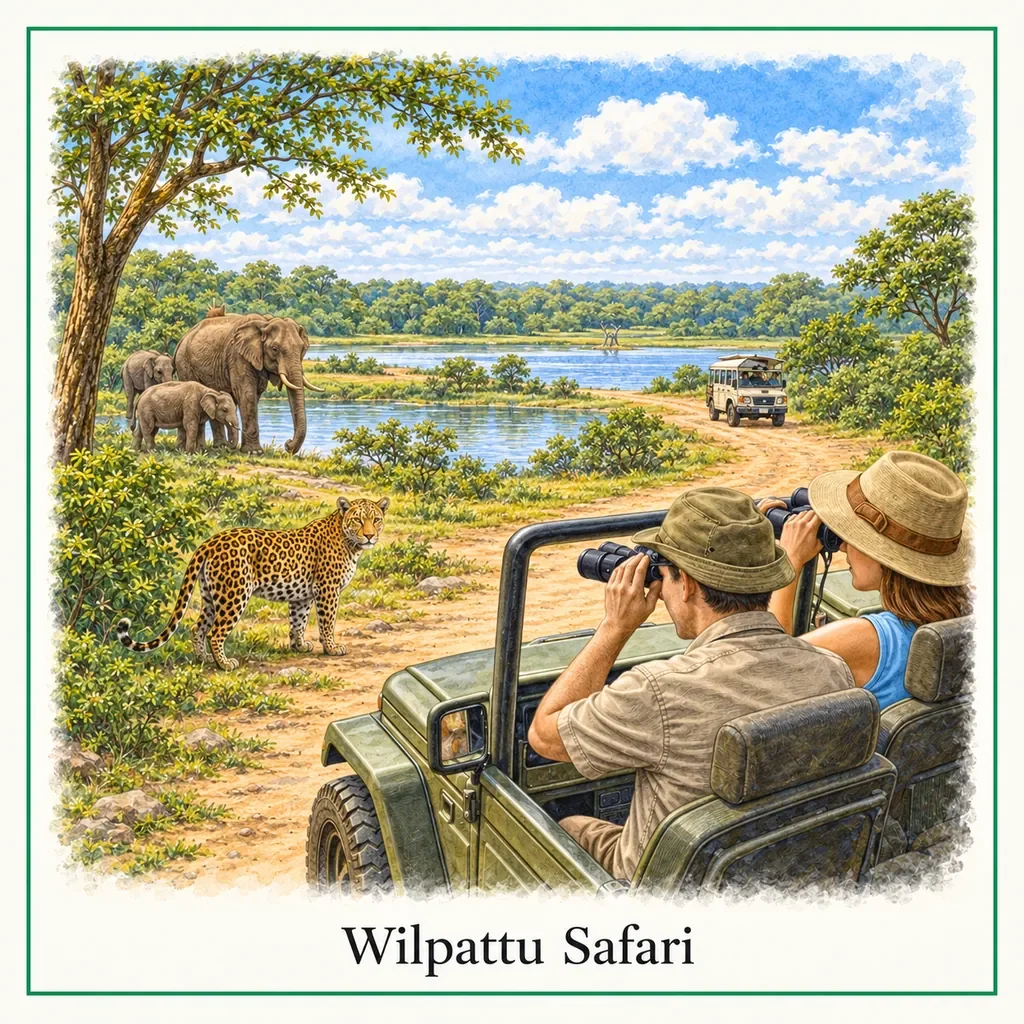
1. Explore the villus and forest by jeep
The changing scenery is central to Wilpattu’s appeal: shaded tracks, sandy clearings and natural lakes where wildlife may come to drink. Let your driver follow current conditions and permitted routes rather than insisting on a fixed checklist.
Leopards and sloth bears can be difficult to spot in dense vegetation. Allow quiet time to observe, keep a respectful distance and avoid drivers who chase animals or rush between reported sightings.
2. Give wildlife time
A pause beside a villu can reveal deer approaching the water, crocodiles along the edge or a bird you would otherwise miss. Take binoculars if you have them and ask your guide to explain the habitat as well as identify animals.
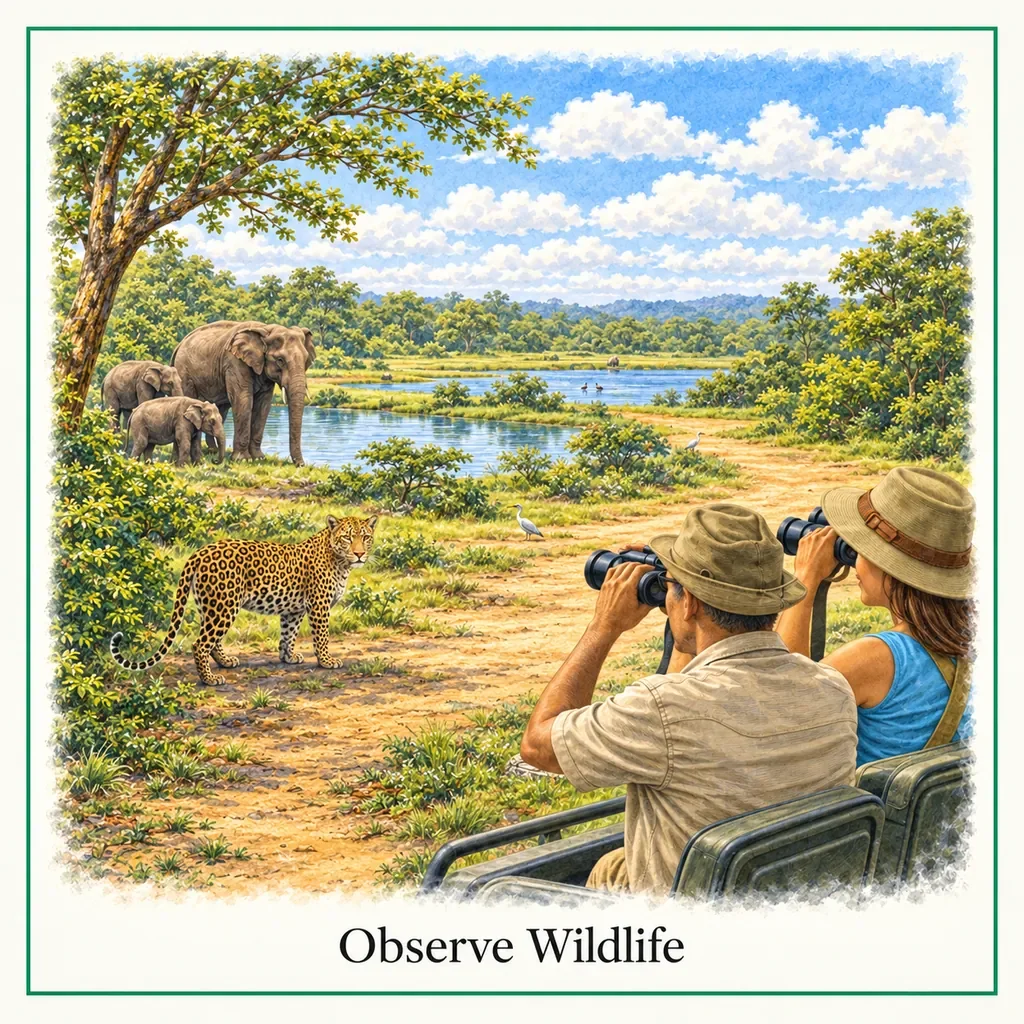
3. Watch birds around the wetlands
The villus and surrounding woodland support a varied mix of waterbirds, raptors and forest species. Ask your driver to make time for birdwatching rather than moving on as soon as larger mammals disappear.
Take binoculars to enjoy distant birds without approaching them. Keep voices low and avoid any attempt to lure wildlife.
4. Combine the park with Anuradhapura
Balance wildlife with the sacred sites and ancient ruins of Anuradhapura. Give the city its own day instead of squeezing a long safari and a full temple itinerary into the same afternoon.

Essential tips for visiting Wilpattu
Stay near your entrance: confirm the gate and pickup distance before booking.
Compare complete prices: clarify vehicle sharing, drive length, permits, required park staff and meals.
Be patient: leopard and sloth-bear sightings are possible, never guaranteed.
Prepare for a long drive: take water, sun protection, a rain layer and dust protection for cameras.
Check accessibility: tracks can be rough; discuss suitability for children or mobility needs.
Follow park rules: stay on permitted routes, remain in the vehicle unless authorised and use designated stops.
Put wildlife first: no feeding, chasing or blocking animals; take litter out.

Where to stay in near Wilpattu NP
Wilpattu National Park is one of Sri Lanka’s largest and most untouched wildlife parks. Known for its natural lakes, called “villus,” and its dense forest, the park offers a quieter safari experience compared to other parks. It is also one of the best places in Sri Lanka to spot leopards, along with elephants, deer, and many bird species.
Staying near Wilpattu National Park is all about nature, wildlife, and early safari drives. Most accommodations are located near the park entrance, offering a peaceful and remote setting. Below, you’ll find the best places to stay near Wilpattu National Park, carefully selected for their comfort, location, and overall experience.
Best places to stay near Wilpattu NP
Claughton Wild
Claughton Wild is one of the most unique places to stay near Wilpattu National Park. The property offers luxury tented accommodation set in a quiet natural area close to the park. The tents are spacious and comfortable, with private bathrooms and a simple but stylish design. Guests can enjoy outdoor dining, campfire evenings, and a strong connection to nature. The staff can arrange safari tours, making it easy to explore the park. The calm and remote setting makes it a great choice for travelers looking for a peaceful and authentic safari experience near Wilpattu.
The Backwaters Lodge
The Backwaters Lodge offers a relaxed and eco-friendly stay surrounded by nature. The rooms are simple but comfortable, designed to blend into the environment. Guests can enjoy home-cooked meals, a quiet atmosphere, and easy access to Wilpattu National Park. The lodge focuses on sustainability and local hospitality, creating a warm and welcoming experience. It’s a great option for travelers who want a simple and peaceful stay close to nature.
Leopard Trails Wilpattu
Leopard Trails Wilpattu offers a high-quality safari camp experience near the park. The tents are well designed and provide a comfortable stay with all necessary facilities. Guests can enjoy guided safaris, good food, and a strong focus on wildlife experiences. The camp provides a more structured safari setup, making it easy to plan your visit. It’s a great choice for travelers who want a complete safari experience with comfort and good service.
Family stays near Wilpattu NP
Big Game Camp Wilpattu
Big Game Camp Wilpattu is a fun option for families with older children who enjoy outdoor experiences. Staying in tents and spending time around the campfire creates a memorable experience. It’s perfect for families looking for something different.
Leopard Trails Wilpattu
Leopard Trails Wilpattu is a great choice for families, especially those with older children. The guided safari experiences make it easy and safe to explore the park. The tents are comfortable and provide enough space for families. The structured setup helps take care of all planning, which is helpful when traveling with kids. It’s a great way for families to experience wildlife together.
Luxury stays near Wilpattu NP
Leopard Den Hotel
Leopard Den Hotel offers a more traditional hotel experience with comfortable rooms and modern facilities. The hotel is located close to the park, making it easy to plan safaris. It’s a good option for travelers who prefer a hotel instead of a camp.
Leopard Trails Wilpattu
Leopard Trails Wilpattu is one of the top luxury safari options near the park. The tents are well equipped, and the service is personal and high quality. Guests can enjoy guided safaris, good food, and a comfortable stay. It’s ideal for travelers who want a high-end safari experience.
Unique & ecostays near Wilpattu NP
Claughton Wild
Claughton Wild is one of the most unique places to stay near Wilpattu National Park. The tented setup and quiet surroundings create a special and memorable experience. It’s perfect for travelers looking for something different.
Big Game Camp Wilpattu
Big Game Camp Wilpattu offers a classic safari-style stay with a focus on outdoor living. The tents and campfire setting create a real adventure feeling. It’s a great choice for a unique experience.

Where to eat near Wilpattu
Dining is mostly at camps, lodges and small restaurants outside the park. Options can be spread out, so ask your host about meals before arrival rather than expecting a walkable restaurant district.
Safari breakfasts and packed lunches
Arrange food the evening before an early departure. For a full-day drive, confirm what your operator provides and where you may eat under park rules. Carry enough drinking water and keep food secured.
Dinner at your camp or lodge
A pre-booked dinner is practical after a long safari. Ask about the menu, serving time and whether meals are included in your accommodation package.
Vegetarian tip: explain your requirements in advance and ask about dried fish or Maldive fish in sambols and curries. Vegan travellers should also check egg and dairy.

How to get to Wilpattu National Park
Plan transport around your accommodation and the entrance your safari will use. Wilpattu covers a large area, so a map pin for the park alone is not enough to arrange pickup.
By private transfer
A car and driver is the simplest option from Anuradhapura, Negombo or Colombo. Confirm the exact lodge address, fare and expected travel time with your host.
By public transport
Ask your accommodation for a current bus or train connection to a suitable nearby town, then pre-arrange the final road transfer. Public transport does not replace the authorised jeep safari inside the park.
Best time to visit Wilpattu
Drier periods generally make tracks easier to travel and can draw wildlife towards the villus. Rain changes the landscape and may affect access, so recent local conditions matter more than a rigid calendar.
Ask your operator about current track conditions and park access before committing to your dates. Early starts offer cooler temperatures; a full-day safari allows more time across changing habitats but requires patience and comfort with a long jeep journey.
Leopards and sloth bears are wild animals with no timetable. Choose Wilpattu for the whole landscape and keep expectations flexible in every season.

What makes Wilpattu different?
Natural lakes known as villus punctuate the dry-zone forest, shaping both the scenery and the way wildlife uses the park. Moving between woodland and open water gives each drive a changing rhythm.
Enjoy those quieter observations as much as a dramatic sighting: deer at a lake edge, a raptor overhead or the calls of birds in the trees. Vehicle numbers vary, so a quieter reputation is not a promise of an empty park.
For an elephant-focused alternative, compare Udawalawe. Our Sri Lanka safari guide helps you choose a park that fits your interests and route.

FAQ – Discover Wilpattu National Park, Sri Lanka
-
Wilpattu offers a distinctive mix of dry-zone forest and natural lakes known as villus. Visit for patient wildlife watching, birdlife and changing scenery, with the possibility of seeing elusive leopards or sloth bears. Visitor numbers vary, so a quieter reputation does not guarantee an empty park.
-
A safari through Wilpattu is the main highlight. You’ll explore a mix of dense forest, open plains, and wetlands, with chances to spot leopards, elephants, sloth bears, deer, and a wide variety of birdlife. The experience here feels slower and more immersive.
-
Wilpattu is home to leopards, but dense vegetation and natural animal movements mean sightings require patience and are never guaranteed. Choose the park for its forest, natural lakes and wider wildlife rather than a promised big-cat encounter. Vehicle numbers vary.
-
We recommend staying 1 to 2 nights. This allows you to do at least one or two safaris and increase your chances of wildlife sightings.
Not sure how to fit Wilpattu NP into your trip? Compare our 7 Day, 2 Week and 3 Week Sri Lanka Itineraries to see how it can work within a complete route.
-
Drier periods generally make tracks more accessible and can draw wildlife towards the villus. Recent rainfall and track conditions matter, so confirm current park access with your operator before booking. Early starts are cooler; no season guarantees a particular sighting.
-
Yes, especially for families who enjoy nature and a quieter safari experience. The longer drives inside the park mean it’s best suited for slightly older children.
For more practical advice, read our Sri Lanka with Kids Guide, or follow our complete 2 Week Sri Lanka Family Itinerary.
-
Wilpattu is usually reached by private driver, often combined with a visit to Anuradhapura or as part of a northern Sri Lanka route.
-
Yes, most lodges and guesthouses offer vegetarian-friendly meals, often prepared fresh using local ingredients.
Read our Vegetarian Food in Sri Lanka Guide for dishes to try, ordering tips and advice for vegetarian travellers.
-
We recommend staying in a safari lodge or eco-resort near the park entrance. These accommodations are often surrounded by nature and designed to complement the safari experience.
Looking for somewhere memorable? Our Extraordinary Places to Stay in Sri Lanka features some of the most unique accommodation experiences around the island.
-
A safari involves wild animals and uneven tracks, so no visit is risk-free. Choose an experienced, responsible operator, follow park staff instructions, stay in the vehicle unless authorised and keep a respectful distance from wildlife. Discuss mobility needs or concerns about long drives before booking.
-
Natural lakes known as villus break up the dry-zone forest and create varied habitats for wildlife and birds. The movement between shaded tracks and open lake edges gives Wilpattu a distinctive landscape and makes patient observation worthwhile.
-
Wilpattu pairs perfectly with Anuradhapura and Jaffna for a northern Sri Lanka route. It’s also a great alternative to more crowded parks if you’re looking for a quieter safari experience.
Continue planning your Sri Lanka safari
Wilpattu offers a very different safari experience from Sri Lanka's busier southern parks. Continue planning with these guides:
Sri Lanka Safari Guide — Compare Wilpattu with the country's other national parks.
Yala National Park Guide — Discover Sri Lanka's best-known leopard safari destination.
Udawalawe National Park Guide — A great choice for travellers hoping to see elephants.
Anuradhapura Travel Guide — Combine Wilpattu with one of Sri Lanka's great ancient cities.
Want to include Wilpattu in a longer route? Follow our 3 Week Sri Lanka Itinerary.
More Sri Lanka inspiration