The ultimate Sri Lanka travel route for December to March
Sri Lanka is one of those rare destinations that feels both compact and incredibly diverse. Within a matter of hours, the landscape shifts from palm-lined beaches to misty highlands, from ancient cities to wildlife-rich national parks. And between December and March, much of the island is at its absolute best. This is the season when Sri Lanka’s south and west coasts shine. The ocean is calm and swimmable, the skies are bright, and the inland regions are lush after the rains. It’s the perfect time to explore the island in a way that feels balanced, unhurried and deeply immersive.
At Beyond Path Asia, we believe that a great journey is not about ticking boxes. It’s about flow. About how one place transitions into the next, how experiences build on each other, and how you feel along the way. This carefully designed Sri Lanka route reflects exactly that philosophy. This itinerary is ideal for around two to three weeks, but it can easily be adapted depending on your pace and interests.
Why travel Sri Lanka between December to March?
Timing matters in Sri Lanka. The island has two monsoon systems, which means different regions are best at different times of the year. Between December and March, the southwest of Sri Lanka is in its dry season. This includes some of the country’s most iconic destinations: Galle, Mirissa, Tangalle and the southern national parks. The hill country is lush and green, and while you may encounter a short tropical shower, it rarely disrupts travel plans. It’s also the best time for whale watching, beach days, and combining cultural highlights with relaxed coastal stays.
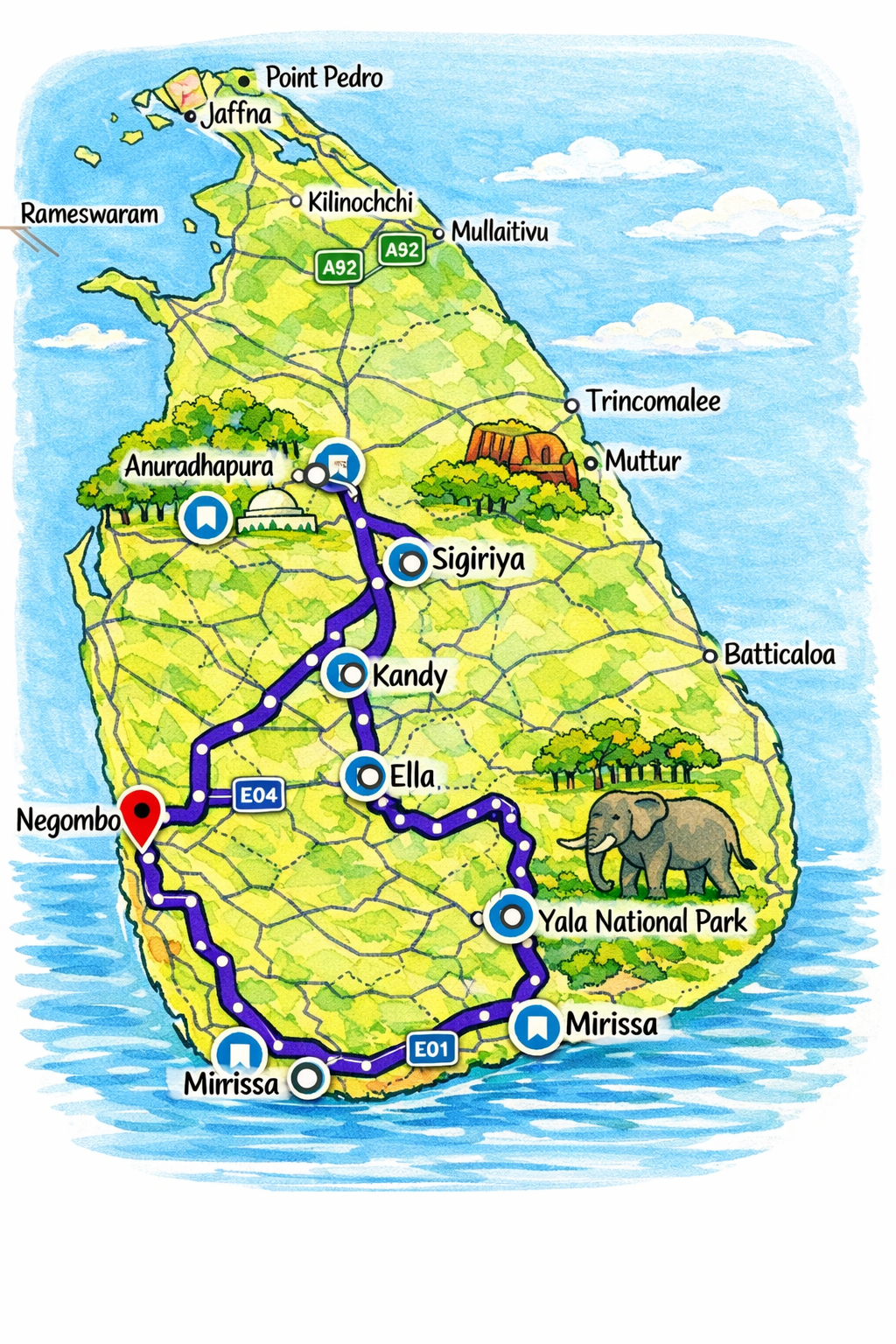
Arrival in Colombo and transfer to Negombo (1 night)
Cultural Triangle: Sigiriya and surroundings (3 nights)
Kandy (2 nights)
The Hill Country: Nuwara Eliya or Ella (2–3 nights)
Yala or Udawalawe National Park (1–2 nights)
South Coast: Tangalle, Mirissa or Hiriketiya (4–6 nights)
Galle (2 nights)
Arrival in Colombo and transfer to Negombo (1 night)
Most journeys begin with arrival in Colombo, but instead of staying in the capital, we recommend heading straight to Negombo. Located just 20 minutes from the airport, it offers a soft landing after a long flight. Negombo has a laid-back coastal atmosphere, with a mix of fishing culture, colonial influences and long sandy beaches. It’s not the most spectacular beach in Sri Lanka, but that’s not the point. This first stop is about slowing down, recovering from travel, and easing into the rhythm of the island. A sunset walk along the beach, a fresh seafood dinner by the water, and the sound of waves in the background set the tone for what’s to come.
For accommodation, budget travelers can opt for simple guesthouses near the beach such as Sea Breeze Guesthouse, while mid-range travelers will enjoy the comfort and charm of Hotel J Negombo. For a more refined start, Jetwing Blue offers beachfront luxury with spacious rooms and a relaxed atmosphere. Families often appreciate Goldi Sands Hotel, which combines location, space and a welcoming feel.
Cultural triangle: Sigiriya and surroundings (3 nights)
From Negombo, the journey continues inland toward the Cultural Triangle. The drive takes you through gradually changing landscapes, from coastal plains to lush countryside dotted with rice fields and small villages. Sigiriya is one of Sri Lanka’s most iconic destinations, known for the towering Lion Rock that rises dramatically from the surrounding jungle. Climbing Sigiriya at sunrise or early morning is an unforgettable experience, with panoramic views stretching across the region. Yet what makes this area truly special is not just the famous landmarks, but the quieter, more local experiences. A bicycle ride through the countryside reveals a different side of Sri Lanka: children waving as you pass, farmers working in the fields, and water buffalo cooling off in lakes. Nearby, Pidurangala Rock offers an alternative climb with equally stunning views, often with fewer crowds. The ancient cave temples of Dambulla add a cultural layer, with centuries-old Buddha statues and intricate murals carved into rock.
For accommodation, budget travelers will find welcoming homestays such as Sigiri Rock Side Home Stay, where hospitality is as memorable as the location. Mid-range options like Elephas Resort & Spa provide comfort surrounded by nature. For a boutique luxury experience, Water Garden Sigiriya stands out with its spacious villas and views of Sigiriya itself. Families often love Aliya Resort & Spa, which combines space, pools and a relaxed atmosphere suitable for all ages.
Kandy (2 nights)
The journey from Sigiriya to Kandy takes you deeper into Sri Lanka’s cultural heart. Kandy, once the last royal capital of the island, sits beautifully around a central lake and is surrounded by rolling hills. The city has a different energy compared to Sigiriya. It’s more vibrant, more urban, yet still deeply rooted in tradition. The Temple of the Tooth, one of the most sacred Buddhist sites in the world, is the spiritual centerpiece. Visiting during a पूजा ceremony offers a glimpse into living traditions that have been practiced for centuries.Beyond the temple, Kandy invites exploration. Wander through local markets, take in views from the surrounding hills, or attend a cultural dance performance that showcases traditional Sri Lankan music and movement.
Accommodation in Kandy ranges from simple and charming to refined and scenic. Budget travelers can stay at Clock Inn Kandy, known for its friendly atmosphere. Mid-range options like Hotel Suisse combine colonial charm with central location. For a more luxurious stay, The Kandy House offers an intimate boutique experience just outside the city. Families often prefer Amaya Hills, where spacious rooms and hillside views create a relaxed environment.
The Hill Country: Nuwara Eliya or Ella (2–3 nights)
From Kandy, the landscape transforms once again as you enter the hill country. Tea plantations stretch across rolling hills, waterfalls cascade down steep slopes, and the air becomes noticeably cooler. The train journey from Kandy to Ella is often considered one of the most scenic in the world. It’s not just transportation; it’s an experience in itself, with open doors, slow rhythms and ever-changing views. Ella is a favorite for many travelers thanks to its relaxed vibe and accessibility to nature. A hike up Little Adam’s Peak at sunrise or a visit to the Nine Arch Bridge offers iconic views, while nearby waterfalls provide refreshing stops. Alternatively, Nuwara Eliya offers a different atmosphere, with colonial architecture, tea estates and a slightly more refined feel. It’s quieter, cooler, and perfect for those who enjoy a slower pace.
Budget travelers in Ella can stay at places like Hangover Hostels Ella, while mid-range travelers often choose Morning Dew Hotel for comfort and views. For luxury, 98 Acres Resort & Spa blends seamlessly into the surrounding tea plantations. Families will appreciate EKHO Ella, which offers both location and space.
Yala or Udawalawe National Park (1–2 nights)
No journey through Sri Lanka feels complete without a safari experience. The transition from the cool hills to the dry plains of the south is striking, and with it comes a completely different ecosystem. Yala National Park is famous for its leopard population, while Udawalawe is known for its large herds of elephants. Both offer incredible wildlife encounters, but the experience depends as much on timing and guiding as on the park itself. Early morning or late afternoon safaris provide the best chances of sightings, but beyond the animals, it’s the atmosphere that stays with you. The quiet of the park, the golden light, the sense of anticipation as you move through the landscape.
Accommodation here is part of the experience. Budget travelers can stay near the park entrances in simple lodges, while mid-range options like Kottawatta Village offer comfort close to nature. For a more immersive stay, Big Game Camp Yala provides tented accommodation with a safari feel. Luxury travelers will find Wild Coast Tented Lodge one of the most unique stays in Sri Lanka, combining design, location and experience. Families often prefer Grand Udawalawe Safari Resort, which offers space and accessibility.
South Coast: Tangalle, Mirissa or Hiriketiya (4–6 nights)
After the cultural landmarks, the cooler highlands and the raw beauty of Sri Lanka’s national parks, the south coast feels like a natural exhale. This is where your journey slows down, where structure fades and days begin to follow the rhythm of the ocean. Between December and March, this stretch of coastline is at its absolute best. The sea is calm and swimmable, the skies are clear, and the beaches are exactly what you hope for when imagining a tropical escape. It’s not just about the scenery, though. It’s about how this part of the journey makes you feel: lighter, more present, more connected to the moment.
Mirissa is often the first choice for travelers looking for a lively yet still relaxed beach destination. Its curved bay, lined with palm trees and small beach cafés, creates a setting that feels both social and easygoing. Early mornings here can start with a whale watching excursion, where you head out before sunrise in search of blue whales and dolphins. It’s a powerful experience, not because it’s dramatic, but because of the quiet anticipation and the vastness of the ocean. Back on shore, the pace shifts. Afternoons are spent barefoot in the sand, moving between cafés, fresh coconut in hand, as the day slowly builds toward sunset.
Tangalle offers something entirely different. It’s quieter, more spacious and feels far removed from the busier parts of the island. Beaches stretch for miles, often with barely anyone else in sight. The atmosphere here is one of stillness. Days unfold slowly, shaped by long walks along the shore, reading in the shade of palm trees and the constant sound of the waves. Tangalle is not about activities or variety; it’s about simplicity. And in that simplicity, it becomes one of the most restorative parts of the journey.
Hiriketiya sits somewhere in between. Tucked into a small horseshoe-shaped bay, it has developed a distinct character in recent years. There’s a subtle energy here, driven by surfers, creatives and travelers who linger longer than planned. The waves are gentle enough for beginners, making it an ideal place to try surfing for the first time. Around the bay, cafés and small boutique stays create a relaxed, almost village-like atmosphere. Mornings tend to start early, with coffee and surf, while afternoons drift into long lunches and unhurried swims.
Wherever you choose to stay, this final part of the route is less about what you do and more about how you spend your time. It’s about creating space after a journey that has been rich in experiences. Accommodation along the south coast reflects this diversity. Budget travelers will find laid-back and social stays like Hangover Hostels Mirissa, where the focus is on atmosphere and connection. Mid-range options are often boutique in style, offering comfortable rooms, thoughtful design and a more personal touch, often right by the beach. For those looking for something more refined, Cape Weligama offers sweeping ocean views and a sense of understated elegance, while Anantara Peace Haven Tangalle combines space, privacy and a beautifully designed coastal setting.
For families, this region works particularly well thanks to its flexibility. Properties like Talalla Retreat provide a calm and spacious environment, while villas and resorts across the coast offer multiple bedrooms, pools and direct beach access. During this season, the ocean is generally calmer, making it more suitable for children to enjoy the water safely. Spending four to six nights on the south coast is not about filling your days with plans. It’s about slowing down enough to feel the journey you’ve just made. It’s about sunsets that arrive without warning, conversations that stretch into the evening, and the simple rhythm of life by the sea. And in many ways, there’s no better way to end a journey through Sri Lanka than exactly like this.
Galle (2 nights)
As your journey along Sri Lanka’s south coast comes to an end, Galle offers a final chapter that feels both atmospheric and complete. The historic Galle Fort, a UNESCO World Heritage site, is unlike anywhere else on the island. Enclosed by thick colonial walls and surrounded by the ocean, it blends European architecture with a distinctly Sri Lankan soul. Staying inside the fort transforms your experience. Mornings begin quietly, with soft light filtering through narrow streets and the sound of the ocean in the distance. As the day unfolds, the fort gradually comes to life. Small cafés open their doors, boutique shops invite you in, and the scent of fresh coffee drifts through hidden courtyards. Galle is best explored without a plan. Wander through its cobbled streets, step into art galleries, and pause often. The beauty of this place lies in the details: weathered shutters, leafy verandas, and unexpected corners that reveal themselves slowly. By late afternoon, life shifts toward the ramparts. Locals and travelers gather here to watch the sun set over the Indian Ocean, a daily ritual that feels both simple and special.
Accommodation within the fort ranges from intimate boutique hotels to elegant heritage properties. Mid-range options like The Fort Printers combine character with comfort, while Amangalla offers a refined, timeless stay steeped in history. Families often prefer staying just outside the fort at places like Le Grand Galle, where there’s more space and direct sea views. Two nights in Galle provide the perfect ending. Not rushed, not overly planned, but just enough time to absorb the atmosphere before heading home.
Ending your journey & why this route works
From Galle, it’s an easy drive back to Colombo Airport. Depending on your flight time, you may choose to stop briefly in Colombo, but most travelers prefer a direct transfer.
This journey flows naturally. It begins gently on the coast, builds into cultural exploration, rises into the cool hills, shifts into wildlife and finally settles into beachside relaxation. It avoids unnecessary backtracking and balances activity with downtime. Each destination adds a different layer to your experience of Sri Lanka.
Sri Lanka between December and March offers one of the most rewarding travel experiences in Asia. It’s diverse without being overwhelming, adventurous yet comfortable, and rich in both nature and culture. This route is designed to help you experience the island in a way that feels complete. Not rushed, not superficial, but connected. And as with all journeys, the most memorable moments will likely be the ones you didn’t plan. A conversation with a local, a quiet sunrise, the rhythm of the train through the hills. That’s where Sri Lanka truly reveals itself.
More Sri Lanka inspiration