Sri Lanka’s cultural triangle
Sri Lanka’s Cultural Triangle brings together ancient cities, active places of worship and the rock fortress of Sigiriya. Use this guide to choose the sites that interest you, plan a practical base and combine history with an optional wildlife experience.
Allow three or four days for a selective introduction, or longer if you want to explore both Anuradhapura and Polonnaruwa without rushing.
The Cultural Triangle is one of the most popular regions to visit in Sri Lanka. Located in the heart of the island, it includes the ancient cities of Anuradhapura and Polonnaruwa, the cave temples of Dambulla, and the iconic Sigiriya Rock Fortress. Habarana is the best base for exploring the Cultural Triangle, with most attractions located within an hour's drive. During our own trip through Sri Lanka, we stayed in Habarana while exploring the Cultural Triangle and found it much more convenient than changing accommodation every day. Most major sites were within an hour's drive, leaving more time for sightseeing and less time on the road.
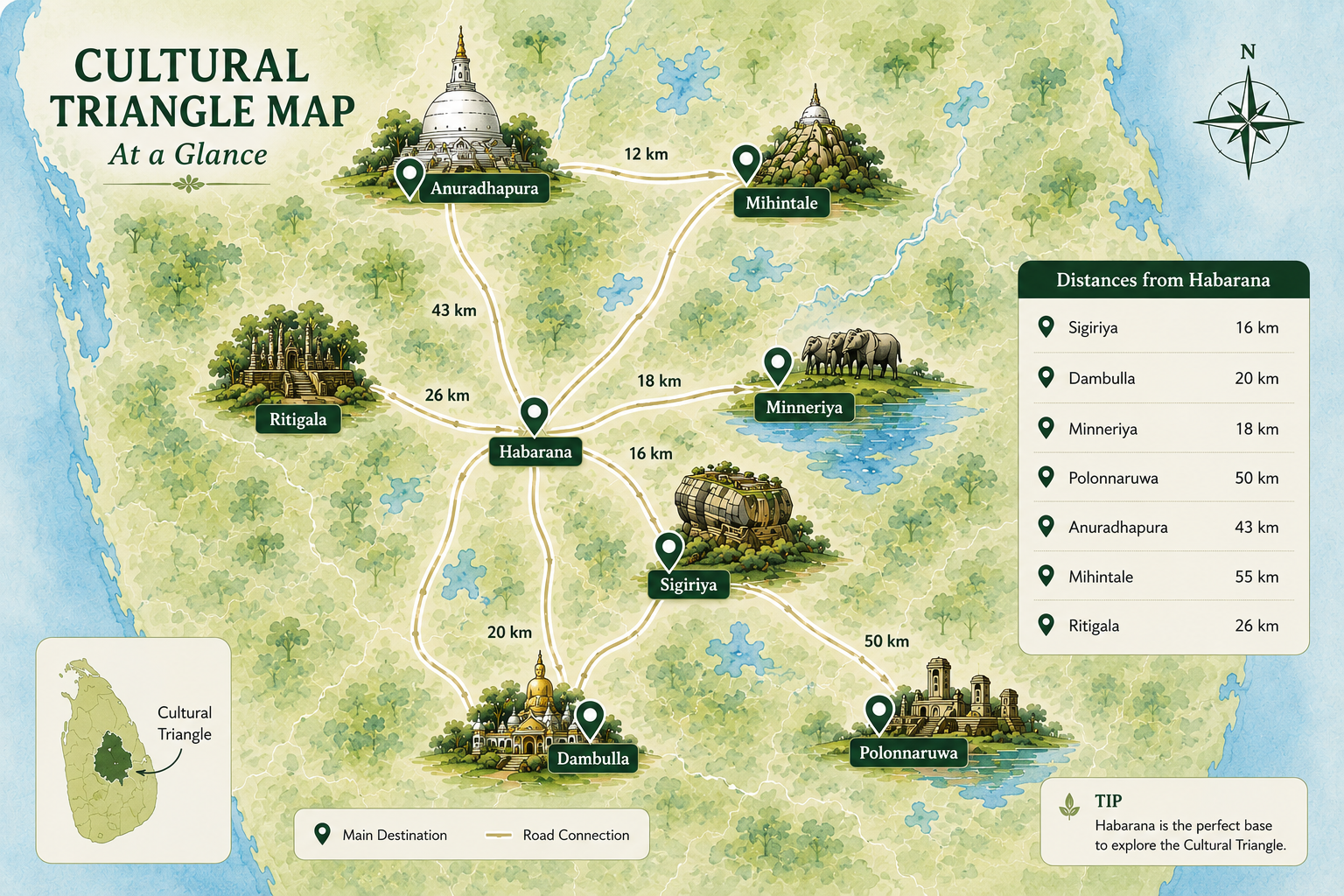
How many days do you need for the Cultural Triangle?
2 days: Sigiriya & Dambulla highlights
3–4 days: Best balance for most travellers
5–6 days: Add Anuradhapura, Polonnaruwa and a safari
What is Sri Lanka’s Cultural Triangle?
Sri Lanka’s Cultural Triangle is one of South Asia’s most extraordinary travel destinations. Located in the island’s north-central region, it encompasses the ancient capitals of Anuradhapura, Polonnaruwa, and Kandy, forming a triangle that contains some of the country's most important historical, religious, and archaeological sites. For more than 1,500 years, this region served as the political, cultural, and spiritual heart of Sri Lanka. Great kings ruled from vast palace complexes, sophisticated irrigation systems transformed dry plains into fertile agricultural lands, and Buddhism flourished, leaving behind an incredible legacy of temples, monasteries, stupas, and sacred relics.
Today, the Cultural Triangle is home to several UNESCO World Heritage Sites and remains one of the most rewarding destinations in Sri Lanka for travelers seeking a deeper understanding of the island’s rich history. Whether you are interested in ancient civilizations, photography, wildlife safaris, spiritual experiences, or off-the-beaten-path adventures, the Cultural Triangle offers an unforgettable journey through the very soul of Sri Lanka.
Why visit the Cultural Triangle?
Many first-time visitors come to Sri Lanka for its beaches, surf spots, and tea plantations. However, the Cultural Triangle often becomes the highlight of their trip.
What makes the region so special is its diversity. Within a relatively small area, travelers can:
Climb ancient rock fortresses
Explore UNESCO World Heritage Sites
Visit sacred Buddhist pilgrimage destinations
Cycle through ancient cities
Go on elephant safaris
Discover hidden jungle monasteries
Photograph spectacular sunrises and sunsets
Experience authentic rural Sri Lanka
Unlike many historical destinations where ruins feel disconnected from daily life, Sri Lanka’s Cultural Triangle remains a living landscape where ancient traditions continue to shape modern communities.
The history behind Sri Lanka’s Cultural Triangle
To truly appreciate the Cultural Triangle, it helps to understand the remarkable history behind it. The story begins more than 2,000 years ago when Anuradhapura emerged as the island’s first great kingdom. Over centuries, Sri Lankan rulers developed advanced irrigation systems that allowed large populations to thrive despite the dry climate. Massive reservoirs, known locally as "tanks," collected and distributed water throughout the region. These engineering achievements were centuries ahead of their time and continue to function today.
As Buddhism spread across the island, magnificent temples and monasteries were constructed. Kings competed to build increasingly impressive stupas and religious monuments, many of which still dominate the landscape. When invasions and political instability eventually weakened Anuradhapura, the capital shifted to Polonnaruwa, ushering in another golden age of architecture, engineering, and religious devotion. The monuments visitors see today are the legacy of these powerful kingdoms.
How to get around the Cultural Triangle
Sigiriya, Dambulla and Habarana work well as a compact cluster, but Anuradhapura and Polonnaruwa require longer transfers. Check exact addresses and allow for traffic, heat and sightseeing time.
Car and driver
A practical option for families, several sites in one day or an onward transfer. Confirm the total price, stops, waiting time and suitable seating; a driver is not automatically a specialist site guide.
Local buses and tuk-tuks
Buses connect main towns, with a final tuk-tuk transfer often needed for accommodation or sites. Agree fares before departure. If considering self-drive, check documents and insurance in our tuk-tuk guide.
Trains
Rail can help you reach a regional town, but it does not replace transport between archaeological sites. Confirm current services and the final road transfer before booking.
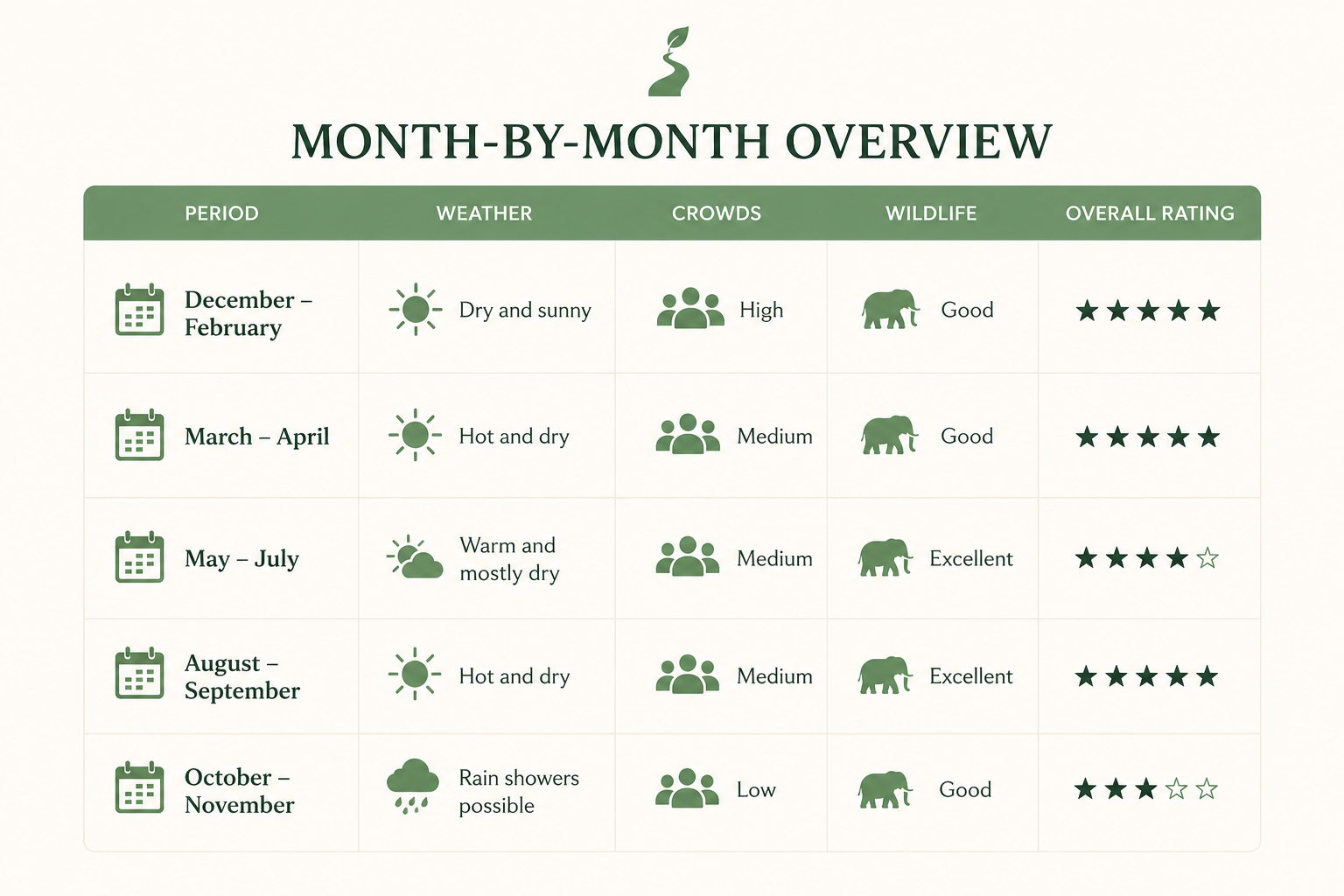
Best time to visit the Cultural Triangle
The region can be explored throughout the year, but dry-zone does not mean rain-free. Seasonal rain, heat and changing local conditions affect walking, climbs and road journeys.
Plan exposed sites for cooler morning hours, carry water and leave room to change the order of activities after heavy rain. December is not a guarantee of low rainfall or clear views, and drier months can be very hot.
If an elephant safari is a priority, ask which permitted park suits current herd movements and water levels. Use seasonal patterns as a guide and check the forecast shortly before visiting.
Choose dates around the whole journey
Match the Cultural Triangle with the coast that suits your travel dates, then keep sightseeing flexible. Our Sri Lanka travel tips explain the wider seasonal choices, while the Minneriya guide covers planning an elephant safari nearby.
Costs and entrance tickets
Major cultural sites can form a significant part of your sightseeing budget. Confirm the current admission category, children’s age rules and what each ticket includes before visiting.
Check the Central Cultural Fund’s official ticket service for the sites it manages. Other temples or sites may have separate arrangements. Do not assume one combined ticket covers every stop, and budget separately for guides and transport.
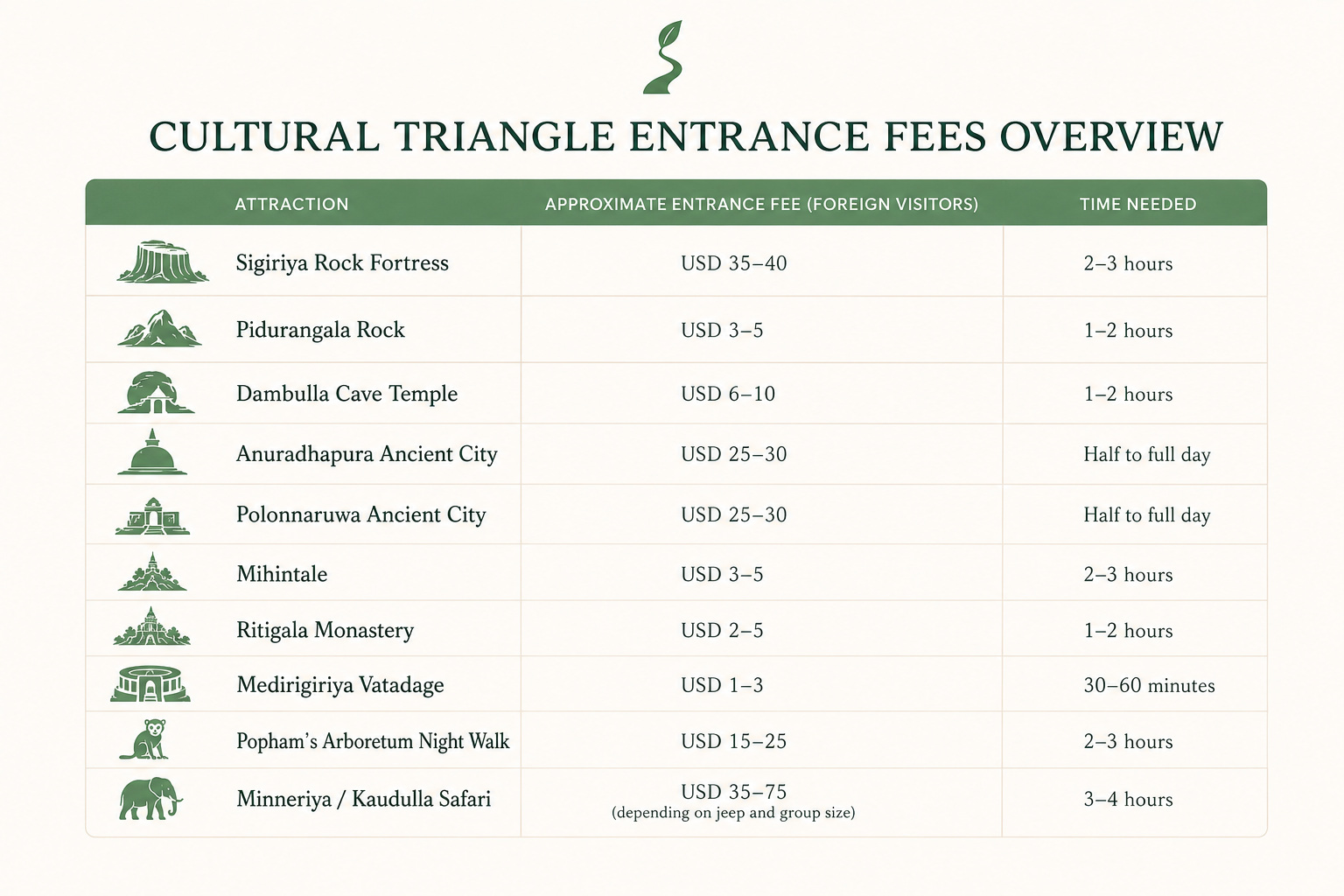
Entrance fees in Sri Lanka can change regularly, especially at UNESCO World Heritage Sites. The prices listed above are intended as a planning guide and should always be verified before your visit.
Is Sigiriya Rock Fortress worth the entrance fee?
Many travelers are surprised by the relatively high entrance fee for Sigiriya Rock Fortress compared to other attractions in Sri Lanka. However, as one of the country's most iconic UNESCO World Heritage Sites and a masterpiece of ancient urban planning, most visitors consider it well worth the investment. The entrance ticket includes access to the ancient water gardens, frescoes, Mirror Wall, Lion Terrace, and the palace ruins at the summit. Combined with the fascinating history of King Kashyapa and the breathtaking views over the surrounding jungle, Sigiriya remains one of Sri Lanka's most memorable experiences. If you're traveling on a tighter budget, Pidurangala Rock offers spectacular views of Sigiriya for a fraction of the cost. Combined with a visit to Dambulla Cave Temple, it provides an excellent alternative cultural experience while keeping expenses lower. During our own trip, Sigiriya was by far the most expensive attraction we visited in the Cultural Triangle. Despite the high entrance fee, it remained one of the highlights of our Sri Lanka itinerary because of its unique history and spectacular views.
Budget tip for exploring the Cultural Triangle
A typical traveler visiting Sigiriya Rock Fortness, Dambulla cave temple, Polonnaruwa, Anuradhapura, Mihintale, and one safari should budget approximately USD 150–250 per person for entrance fees and activities alone.
To make the most of your budget:
Prioritize the sites that interest you most.
Visit lesser-known attractions such as Ritigala and Medirigiriya.
Share safari jeeps with other travelers when possible.
Stay several nights in Habarana or Sigiriya to reduce transportation costs.
Tip: Visiting Pidurangala at sunset offers some of the best views in Sri Lanka for just a fraction of the cost of Sigiriya.
Knowing the expected entrance fees in advance helps you plan your Cultural Triangle itinerary more effectively and avoid surprises during your trip.
Our recommendation
If we were planning a Cultural Triangle itinerary on a limited budget, we would prioritize Sigiriya, Dambulla and either Anuradhapura or Polonnaruwa. These attractions are also included in our recommended 5-day Cultural Triangle itinerary.
Sigiriya Rock Fortress: Sri Lanka’s most iconic landmark
No visit to the Cultural Triangle is complete without climbing Sigiriya Rock Fortress, often called the Eighth Wonder of the Ancient World. Rising dramatically 200 meters above the surrounding jungle, Sigiriya dominates the landscape and has become the most recognizable symbol of Sri Lanka.
The story of King Kashyapa
The history of Sigiriya is as fascinating as its appearance. In the 5th century AD, King Kashyapa seized the throne after overthrowing his father. Fearing retaliation from his rightful heir brother, he abandoned the traditional capital and transformed Sigiriya into an almost impregnable fortress-palace. The summit housed royal residences, pools, gardens, and defensive structures. However, Kashyapa's reign ultimately ended in defeat, and Sigiriya later became a Buddhist monastery. Today, visitors follow the same pathways once used by kings, monks, and royal courtiers.
What you'll see during the climb
The climb to Sigiriya Rock Fortness is much more than reaching the summit. Highlights include:
Water Gardens; among the oldest landscaped gardens in Asia, these symmetrical gardens demonstrate remarkable hydraulic engineering.
Boulder Gardens; massive natural rock formations create a dramatic approach to the fortress.
Sigiriya Frescoes; beautifully preserved paintings of celestial maidens remain one of Sri Lanka’s greatest artistic treasures.
Mirror Wall; Originally polished so highly that it reflected visitors like a mirror, this wall still contains ancient inscriptions left by travelers over a thousand years ago.
Lion's Gate; The enormous lion paws that remain today once formed part of a gigantic lion-shaped entrance.
Summit Ruins; The top of the rock offers breathtaking panoramic views and the remains of King Kashyapa’s palace complex.
Practical Information
Duration: 2–3 hours
Difficulty: Moderate
Best Time: Sunrise or early morning
Opening Hours: Usually from 5:30 AM
Pidurangala Rock: the best view in Sri Lanka
Just a few kilometers from Sigiriya lies Pidurangala Rock, one of the country's most spectacular viewpoints. While Sigiriya Rock Fortness is famous for its history, Pidurangala Rock offers something equally valuable: the best possible view of Sigiriya Rock Fortness itself. The hike takes approximately 30–45 minutes and culminates in a rocky summit overlooking Lion Rock and the surrounding jungle. Many travelers now rank Pidurangala Rock as their favorite sunrise experience in Sri Lanka.
Why visit Pidurangala Rock?
Incredible sunrise views
Lower entrance fee
Less crowded
Excellent photography opportunities
For the ultimate experience, climb Pidurangala Rock at dawn and visit Sigiriya Rock Fortness later the same morning.
Wildlife safaris in the Cultural Triangle
One of the unique aspects of the Cultural Triangle is the combination of ancient history and wildlife.
Within a short drive from Sigiriya and Habarana, several national parks offer outstanding safari experiences.
Minneriya National Park
Minneriya is best known for The Gathering, considered one of Asia’s greatest wildlife spectacles. During the dry season, hundreds of elephants congregate around the reservoir, creating extraordinary viewing opportunities. Besides elephants, visitors may also spot:
Sambar deer
Crocodiles
Monkeys
Peacocks
Eagles
Numerous water birds
Kaudulla National Park
Elephant herds frequently move between Minneriya and Kaudulla depending on water levels. Kaudulla often offers:
Fewer safari vehicles
Excellent elephant sightings
Outstanding birdwatching
Hurulu Eco Park
Hurulu Eco Park has become increasingly popular among travelers seeking a more intimate safari experience. The park is particularly attractive because it often receives fewer visitors than Minneriya.
Somawathiya National Park
Far less visited than the other parks, Somawathiya combines wildlife with religious significance and pristine natural landscapes.
Anuradhapura: Sri Lanka’s First Great Kingdom
Founded in the 4th century BC, Anuradhapura served as Sri Lanka’s capital for more than 1,300 years. Today, it remains one of the most sacred Buddhist destinations in the world and one of Asia’s greatest archaeological sites. Unlike many ancient cities, Anuradhapura is vast. Exploring by bicycle allows visitors to experience its scale while moving between monuments at a comfortable pace.
Sri Maha Bodhi - The sacred Bodhi Tree is believed to be the oldest historically documented tree in the world. Grown from a cutting of the tree under which Buddha attained enlightenment, it remains an active pilgrimage site.
Ruwanwelisaya - Often considered Sri Lanka’s most beautiful stupa, Ruwanwelisaya attracts thousands of devotees daily. Its brilliant white dome dominates the skyline and creates a particularly magical atmosphere at sunset.
Jetavanaramaya - When completed, Jetavanaramaya was among the tallest structures on Earth. Even today, its immense scale remains awe-inspiring.
Isurumuniya Temple - This charming rock temple is famous for its intricate carvings, including the renowned "Isurumuniya Lovers." The temple’s lakeside setting provides a peaceful contrast to the city's massive stupas.
Aukana Buddha Statue - Located near Anuradhapura, the Aukana Buddha stands approximately 12 meters tall and is considered one of Sri Lanka's finest examples of ancient stone sculpture.
Mihintale: where Buddhism arrived in Sri Lanka
A short distance from Anuradhapura lies Mihintale, one of the most sacred locations in Sri Lanka. According to tradition, this is where the monk Mahinda introduced Buddhism to King Devanampiya Tissa in the 3rd century BC. Visitors climb hundreds of stone steps to reach:
Ancient stupas
Sacred shrines
Meditation caves
Stunning viewpoints
Many travelers consider Mihintale one of the most atmospheric sites in the entire Cultural Triangle.
Kaludiya Pokuna
Located near Mihintale, Kaludiya Pokuna remains one of Sri Lanka’s best-kept secrets. The site features:
Ancient monastery ruins
Reflective ponds
Jungle trails
Exceptional birdlife
Unlike the major attractions, you may have the entire site almost to yourself.
Polonnaruwa: The medieval capital
Following the decline of Anuradhapura, Polonnaruwa became Sri Lanka’s second great capital. Its golden age occurred during the reign of King Parakramabahu I, who oversaw ambitious construction projects and irrigation works. Today, Polonnaruwa is one of the best-preserved archaeological sites in South Asia.
Gal Vihara
The masterpiece of Polonnaruwa. These enormous Buddha statues carved directly into granite are widely regarded as some of the finest sculptures in Asia.
Royal Palace of King Parakramabahu
Although only portions remain, the palace provides insight into the power and wealth of medieval Sri Lanka. Historical sources suggest it once contained hundreds of rooms.
Parakrama Samudra
This massive reservoir remains one of the greatest engineering achievements in Sri Lankan history. It still supports agriculture centuries after its construction.
Rankoth Vehera
The largest stupa in Polonnaruwa is an impressive example of ancient Buddhist architecture.
Medirigiriya Vatadage
Among the Cultural Triangle’s hidden treasures, Medirigiriya is perhaps the most photogenic. Its circular arrangement of stone pillars creates one of the island’s most beautiful archaeological settings.
Dambulla cave temple: Sri Lanka’s largest and best-preserved cave temple complex
While Sigiriya often steals the spotlight, the Dambulla Cave Temple is one of the most important cultural and religious sites in Sri Lanka and an essential stop on any Cultural Triangle itinerary. Officially known as the Golden Temple of Dambulla, this remarkable complex has been a place of Buddhist worship for more than 2,000 years and was designated a UNESCO World Heritage Site in 1991.
Perched atop a rocky outcrop overlooking the surrounding countryside, Dambulla consists of five interconnected cave temples filled with an extraordinary collection of Buddhist art. Inside, visitors will find more than 150 Buddha statues, ranging from small seated figures to a spectacular 14-metre-long reclining Buddha carved directly into the rock. The caves also contain statues of Sri Lankan kings and Hindu deities, reflecting the island’s rich cultural and religious heritage.
One of Dambulla’s greatest treasures is its vast collection of ancient murals and cave paintings. Covering more than 2,000 square metres of walls and ceilings, these colourful artworks depict scenes from the life of Buddha, important moments in Sri Lankan history, and centuries of Buddhist traditions. The intricate paintings create a unique atmosphere and make Dambulla one of the finest examples of Buddhist cave art in Asia.
Beyond its historical significance, the temple offers stunning panoramic views over the surrounding plains, forests, and distant mountains. On a clear day, visitors can even spot Sigiriya Rock rising above the jungle in the distance.
Practical tips for visiting Dambulla cave temple
Location: Approximately 20 km south of Sigiriya.
Visit Duration: Allow 1.5 to 2 hours.
Best Time to Visit: Early morning or late afternoon to avoid the midday heat.
Dress Code: Shoulders and knees must be covered, as the caves are active religious sites.
Footwear: Shoes must be removed before entering the temple caves.
Photography: Allowed inside most areas, but avoid posing with your back towards Buddha statues.
For travelers exploring the Cultural Triangle, Dambulla provides the perfect combination of history, spirituality, art, and architecture. Together with Sigiriya, Anuradhapura, and Polonnaruwa, it forms one of the cornerstones of Sri Lanka’s extraordinary cultural heritage and deserves a place high on every itinerary.
Hidden gems of the Cultural Triangle
Many visitors focus exclusively on the famous UNESCO sites, but some of the region’s most memorable experiences lie beyond the main tourist trail.
Ritigala Monastery - Hidden deep within a forest reserve, Ritigala feels worlds away from Sri Lanka’s more famous archaeological sites. In our experience, Ritigala was one of the most memorable places in the Cultural Triangle. Unlike the major UNESCO sites, we encountered very few visitors, which made exploring the jungle-covered ruins feel much more special. According to local legends, the mountain possesses mystical properties and may even be connected to the Ramayana epic. Ancient monks chose this isolated location for meditation and spiritual practice. Visitors can explore:
Stone-paved pathways
Meditation platforms
Reservoirs
Jungle-covered monastic ruins
The atmosphere is peaceful, mysterious, and unforgettable.
Popham’s Arboretum - Nature enthusiasts should not miss Popham’s Arboretum. This privately managed forest reserve is one of the best places in Sri Lanka to spot the elusive Slender Loris, a rare nocturnal primate. Guided night walks provide a unique wildlife experience often overlooked by mainstream tourism.
Ibbankatuwa Megalithic Tombs - Dating back over 2,500 years, the Ibbankatuwa burial complex offers a glimpse into Sri Lanka's prehistoric civilizations. The site predates many of the island’s great kingdoms and provides valuable insights into ancient burial practices.
Nalanda Gedige - Nalanda Gedige is unlike any other monument in Sri Lanka. Combining Hindu and Buddhist architectural influences, the temple reflects the cultural interactions that shaped the island's history. Its tranquil lakeside setting makes it one of the most photogenic locations in the Cultural Triangle.
A five-day Cultural Triangle route to adapt
This example uses Sigiriya or Habarana for the first three nights, then Anuradhapura for one night. Choose fewer sites if travelling with children or if you want more time for history.
Day 1: arrive and settle in
Keep the day light after a long transfer. Visit Dambulla only if it fits your arrival route and energy; otherwise keep it for day two. Do not commit to a sunset climb after a tiring journey.
Day 2: Sigiriya and one optional outing
Visit Sigiriya early within current opening hours. Rest at midday, then choose Dambulla or a responsibly operated safari if timing and conditions suit. You do not need both.
Day 3: Polonnaruwa
Allow a substantial part of the day for Polonnaruwa, with breaks and suitable transport between the ruins. Return to your base without adding another long checklist.
Day 4: transfer to Anuradhapura
Check in, rest and visit a selected part of the sacred city later in the day. A local guide can help distinguish archaeological sites from active worship areas.
Day 5: finish locally and continue
Choose more of Anuradhapura or nearby Mihintale according to your interests, mobility and onward journey. Keep time for the transfer; do not combine several distant hidden sites with an important flight connection.
Add a night if you want Ritigala, Pidurangala or a second wildlife outing. Confirm opening hours and local conditions rather than building the day around a fixed climb or safari departure time.
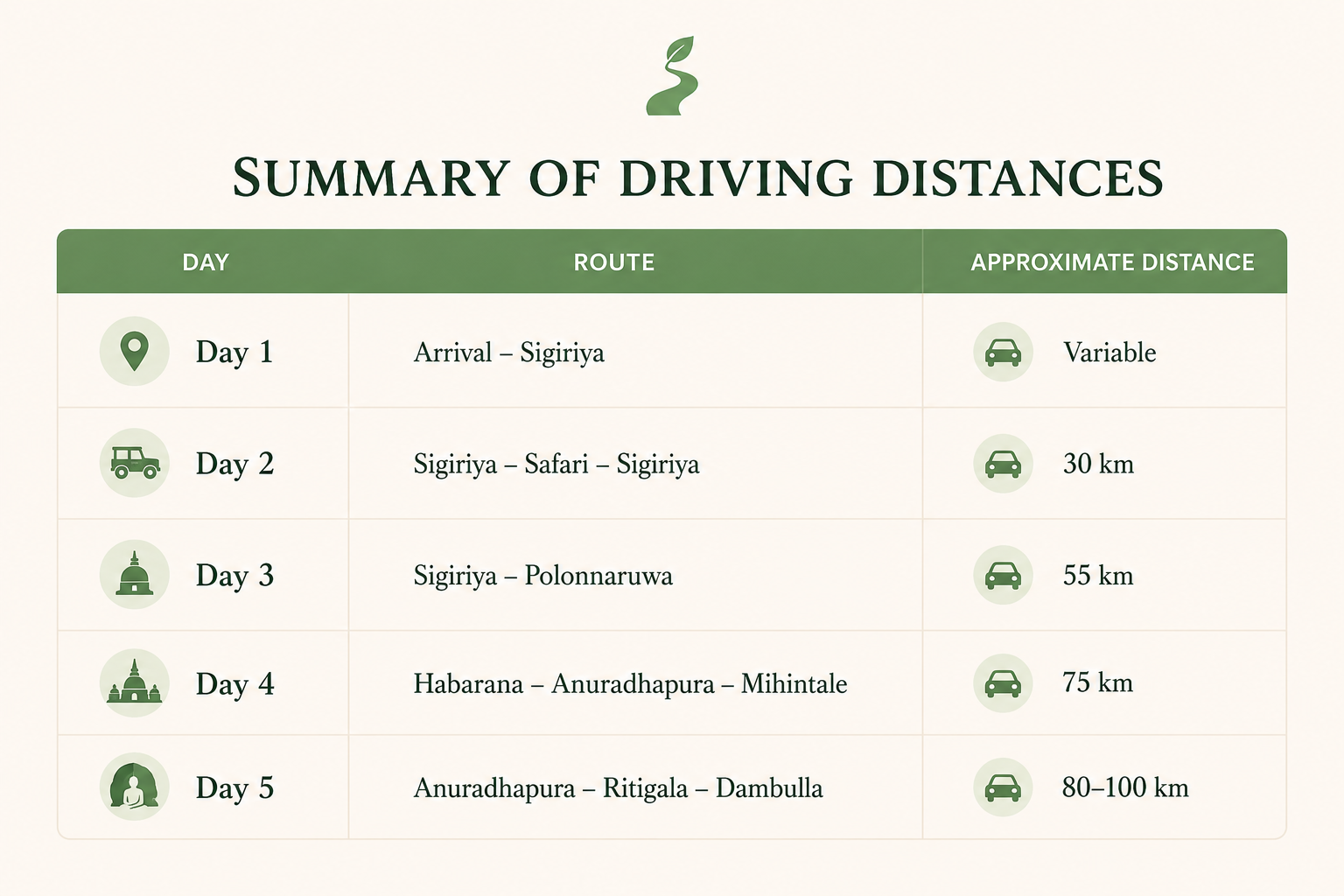
Adapt the number of stops
This route is a starting point, not a requirement to visit every site. For a shorter stay, focus on Sigiriya and Dambulla. With more time, give Anuradhapura or Polonnaruwa a fuller visit and add rest afternoons between outings.
Continue towards Kandy, the hill country or the coast that suits your season, allowing realistic transfer time.
Where to stay in the Cultural Triangle
Sigiriya - Best for first-time visitors and photographers.
Water Garden Sigiriya
Water Garden Sigiriya is one of the most unique stays in the area, thanks to its design and setting. The villas are spread across water gardens, creating a peaceful and private atmosphere. The view of Sigiriya Rock adds to the experience. It’s ideal for travelers looking for something special.
👉 Check availability & prices at Water Garden Sigiriya
Back of Beyond - Pidurangala
Back of Beyond offers a simple and unique stay in nature. The accommodation is designed to blend into the environment, creating a peaceful and quiet atmosphere. Guests can enjoy a slower pace of life and connect with nature. It’s ideal for travelers looking for something different.
👉 Check availability & prices at Back of Beyond
Habarana - Most central location for sightseeing and safaris.
Cinnamon Lodge Habarana
Cinnamon Lodge Habarana is one of the finest resorts in Sri Lanka's Cultural Triangle, offering a perfect blend of luxury, nature, and family-friendly facilities. Set beside a peaceful lake and surrounded by lush tropical gardens, the resort is home to abundant birdlife, monkeys, and butterflies. Spacious rooms, multiple restaurants, a large swimming pool, and excellent service make it an ideal base for exploring Sigiriya, Minneriya National Park, Polonnaruwa, and Anuradhapura. Whether you're traveling as a couple or with family, Cinnamon Lodge combines comfort with an unforgettable natural setting.
👉 Check availability & prices at Cinnamon Lodge Habarana
Habarana Village by Cinnamon
Habarana Village by Cinnamon offers a charming lakeside retreat inspired by traditional Sri Lankan village architecture. Surrounded by tropical gardens and overlooking Habarana Lake, the resort provides a peaceful atmosphere while remaining close to many of Sri Lanka's most famous cultural and wildlife attractions. Guests can relax by the large outdoor pool, enjoy authentic Sri Lankan cuisine, and often spot elephants and exotic birds in the surrounding area. Its spacious rooms, welcoming atmosphere, and excellent location make it a fantastic choice for couples, families, and nature lovers exploring the Cultural Triangle.
👉Check availability & prices at Habarana Village by Cinnamon
Anuradhapura - Ideal for history enthusiasts and pilgrims.
Uga Ulagalla
In addition to its luxury appeal, Uga Ulagalla also stands out for its commitment to sustainability. The resort uses solar power and eco-friendly practices while maintaining high comfort levels. It’s an excellent choice for travelers who value responsible travel without compromising on quality.
👉Check availability & prices at Uga Ulagalla
The Lake Forest Hotel
The Lake Forest Hotel is one of the best-located hotels in Anuradhapura, offering direct access to the sacred city while maintaining a peaceful setting. Surrounded by trees and overlooking a small lake, the hotel provides a calm and relaxing atmosphere. The rooms are modern, spacious, and comfortable, making it a great base for exploring nearby temples and historical sites. After a day of sightseeing, guests can unwind by the pool or enjoy a quiet evening in the garden. It’s an excellent choice for travelers who want convenience without sacrificing tranquility.
👉 Check availability & prices at The Lake Forest Hotel
Polonnaruwa - Perfect for cyclists and archaeological exploration.
Livinginn Polonnaruwa
Livinginn Polonnaruwa is a small eco-conscious guesthouse offering a simple and authentic stay. The property focuses on sustainability and local hospitality, creating a warm and welcoming environment. It’s a great option for travelers looking for a meaningful and budget-friendly experience.
👉 Check availability & prices at Livinginn Polonnaruwa
Deer Park Hotel
Deer Park Hotel stands out for its природная surroundings and eco-friendly approach. The property blends into the environment, allowing guests to experience wildlife and nature up close. It’s a great choice for travelers seeking a sustainable stay.
Frequently Asked Questions - FAQ
-
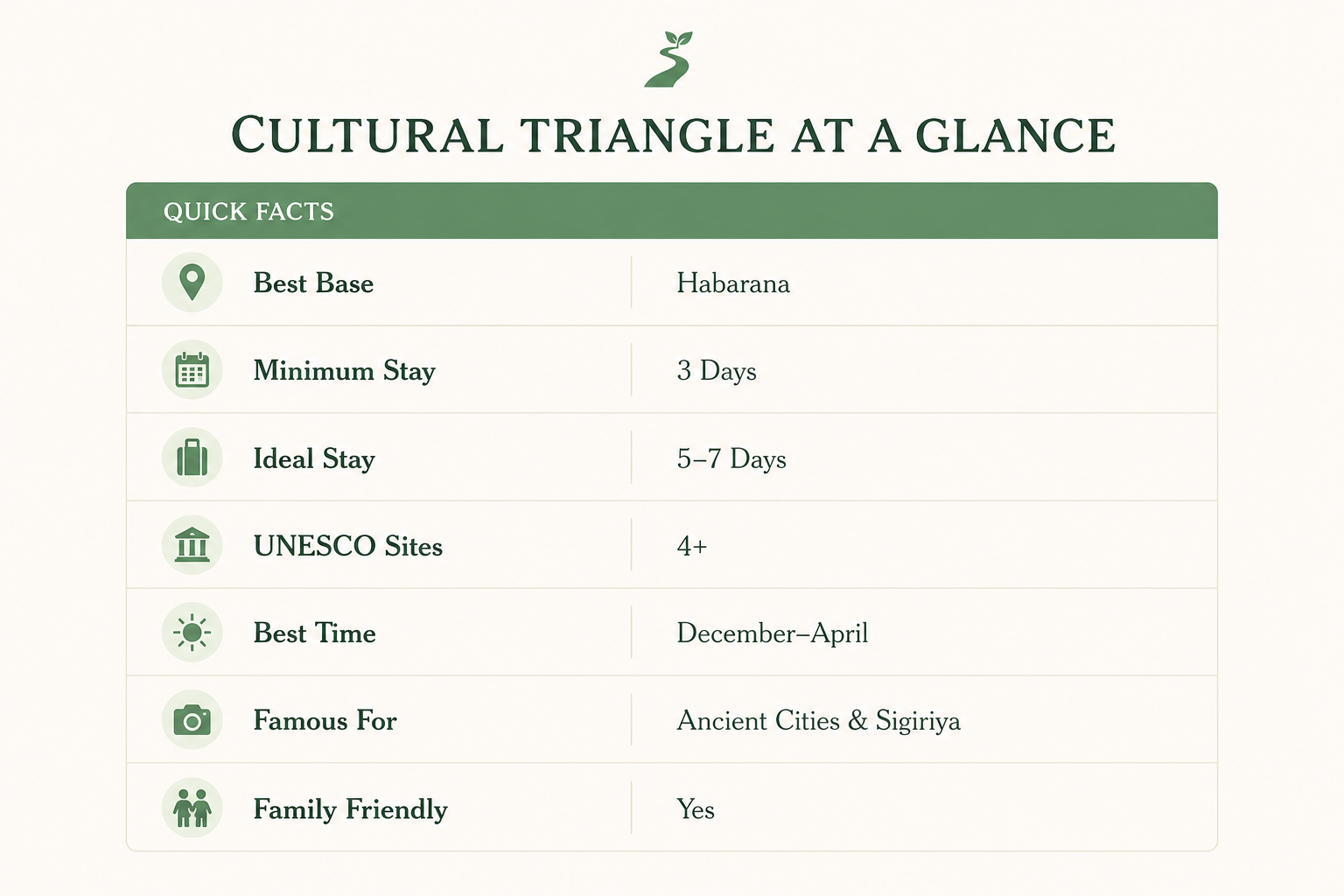
A minimum of three days is recommended, but five to seven days allows for a much richer experience.
-
Absolutely. Sigiriya rock is widely regarded as Sri Lanka’s most iconic attraction and one of Asia’s greatest archaeological sites.
-
They offer different experiences. Sigiriya rock provides historical significance, while Pidurangala rock offers the best views. We personally preferred Pidurangala for sunset because of the panoramic views of Sigiriya Rock and the surrounding jungle.
-
Yes. Most sites are easy to visit independently, though guided tours can greatly enhance your understanding of the history.
-
Both are exceptional. Anuradhapura feels more spiritual and expansive, while Polonnaruwa is easier to explore and features some of the island’s best-preserved ruins.
-
Ritigala was the biggest surprise of our trip through Sri Lanka. While sites such as Sigiriya and Polonnaruwa attract most visitors, Ritigala felt much more secluded and atmospheric. Exploring the jungle-covered ruins without the crowds made it one of the highlights of our trip.
-
Yes. The roads between the main attractions are generally in good condition and distances are manageable. Many independent travellers explore the Cultural Triangle by tuk-tuk because it offers flexibility and allows easy access to lesser-known sites such as Ritigala and Kaludiya Pokuna.
-
Habarana is the best base for most travellers because it is centrally located within the Cultural Triangle and provides easy access to Sigiriya, Dambulla, Polonnaruwa, Anuradhapura and the nearby safari parks. During our trip, staying in Habarana made it easy to visit Sigiriya, Polonnaruwa, Anuradhapura, Dambulla and the nearby safari parks without spending hours on the road each day.
Continue exploring the Cultural Triangle
Ready to plan the individual stops? Explore our detailed destination guides:
Sigiriya Travel Guide — Lion Rock, Pidurangala, places to stay and practical tips.
Dambulla Travel Guide — Cave temples, nearby attractions and travel advice.
Anuradhapura Travel Guide — Ancient temples, stupas and sacred sites.
Polonnaruwa Travel Guide — Explore the ruins of Sri Lanka's medieval capital.
Minneriya National Park Guide — Add an elephant safari to your Cultural Triangle journey.
Need help planning the whole trip? Explore our 7 Day, 2 Week and 3 Week Sri Lanka Itineraries.
Final thoughts
Sri Lanka’s Cultural Triangle is more than a collection of ancient monuments. It is the story of kingdoms that shaped a nation, monks who spread Buddhism across an island, and engineers who transformed a dry landscape into a thriving civilization.
From the legendary heights of Sigiriya and the sacred Bodhi Tree of Anuradhapura to the artistic brilliance of Gal Vihara and the hidden jungle ruins of Ritigala, every destination reveals another chapter in Sri Lanka’s remarkable history. For travelers seeking culture, adventure, spirituality, wildlife, and authentic local experiences, there is no better place to begin exploring Sri Lanka than the Cultural Triangle. If you only have time to visit one region of Sri Lanka, make it this one.
More Sri Lanka inspiration