Vegetarian food in Sri Lanka: what to eat & how to order
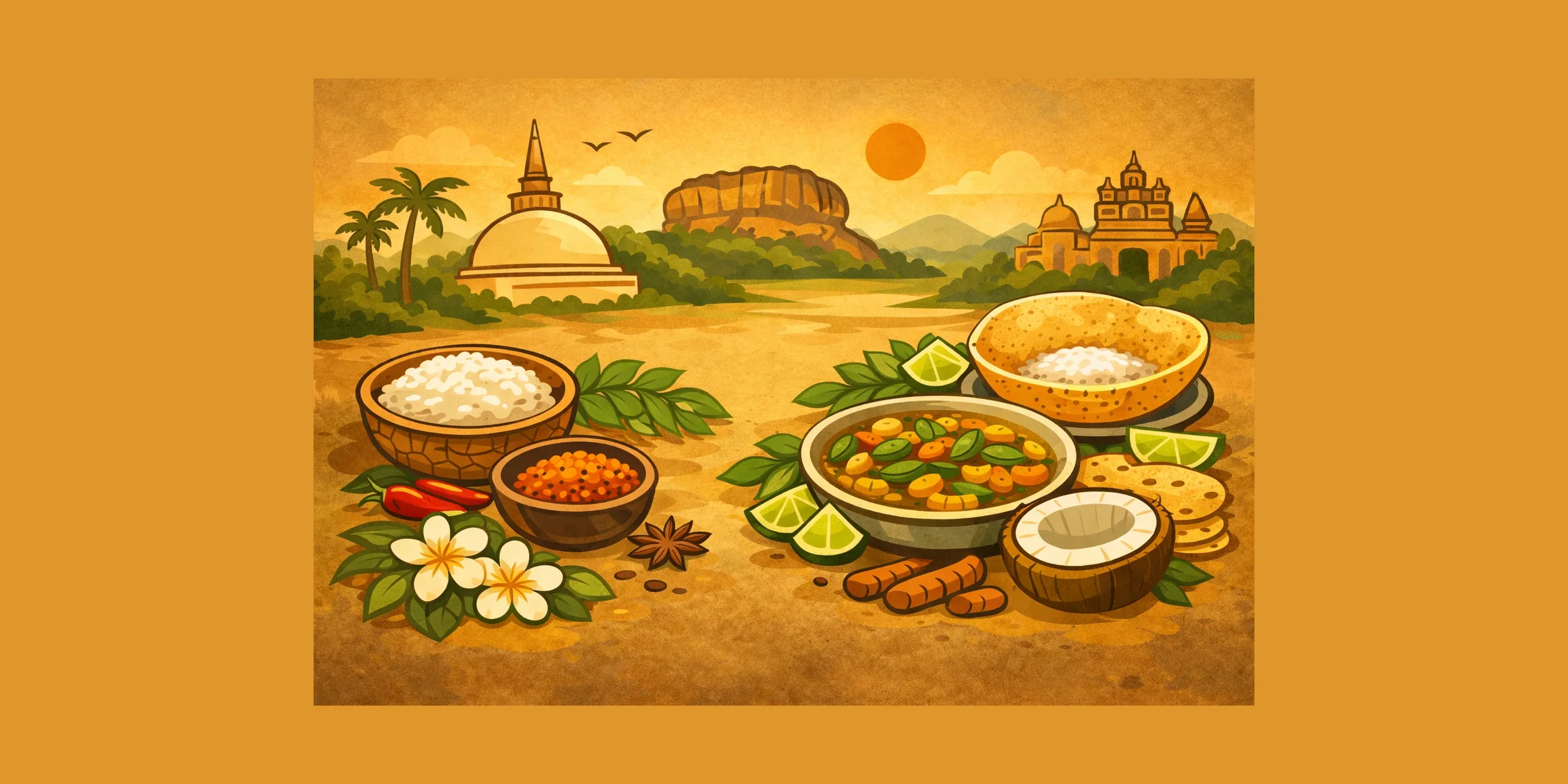
Vegetarian food in Sri Lanka goes far beyond a side salad. Rice and curry, dhal, coconut-based dishes, hoppers and seasonal vegetables give you plenty to explore. The key is checking how each dish is prepared: a vegetable name on the menu does not guarantee a meat-free or vegan meal.
This guide explains what to try, how to order and which ingredients to ask about, whether you are staying in a guesthouse or eating your way through the island’s towns.
What vegetarian food should you try in Sri Lanka?
Rice, lentils, vegetables, coconut and spices are central to everyday cooking. Recipes vary between kitchens, so use these dishes as a starting point and confirm ingredients when ordering.
Rice and curry
Expect rice with several small accompaniments rather than one curry. Ask for a vegetarian selection: dhal, pumpkin, beans, beetroot, aubergine or jackfruit may feature, depending on the kitchen and season. Check the sambols and sauces as well as the main dishes.
Dhal and vegetable curries
Lentil curry is a useful place to start. Try it alongside jackfruit, pumpkin or aubergine for different textures and flavours. Coconut milk is common, but ask whether a particular preparation also contains dairy or fish ingredients.
Hoppers, string hoppers and roti
Plain hoppers, steamed string hoppers and coconut roti make a satisfying change from rice. What comes with them matters: check curries and sambols, and specify whether you eat eggs.
Vegetable kottu
Chopped roti cooked with vegetables is a popular evening option. Ask whether egg, cheese, meat stock or a shared cooking surface is involved, depending on your requirements.
How to order vegetarian or vegan food
Explain what you avoid rather than relying on the word vegetarian alone. A useful request is: “No meat, no fish, no seafood, no dried fish and no Maldive fish, please.” Mention eggs and dairy separately.
Ingredients to check
Maldive fish and dried fish: these can be used as seasoning in sambols or vegetable preparations.
Stocks and sauces: ask what gives the dish its flavour, including any fish or meat-based ingredients.
Egg and dairy: vegan travellers should ask about egg, milk, butter, ghee and cheese.
Shared equipment: explain if separate pans or utensils matter to you.
If a dish is already cooked, it may not be possible to remove an ingredient. Ask what can be prepared separately instead.
Where to find vegetarian meals
Guesthouses can be a good option when you discuss dinner in advance. Local rice-and-curry kitchens offer variety, while cafés in Ella, Kandy and Mirissa provide additional choices. A vegetarian or vegan label is helpful, but ingredients still deserve a quick check.
Choose a vegetarian-friendly cooking class
A cooking class can introduce you to curry leaves, spice combinations and the different ways coconut is used. Ask before booking whether the whole session can be vegetarian or vegan, including stocks, sambols and shared equipment.
Check whether a market visit is included, how hands-on the class is and whether recipes are provided afterwards. Our Sri Lanka experiences guide helps you consider a class alongside other activities.
Practical tips for eating well
Ask your guesthouse about meals before arrival, especially in remote areas.
Confirm serving times rather than assuming every dish is available all day.
Request milder spice levels when ordering; this is separate from dietary requirements.
Keep a written explanation of what you avoid on your phone.
If you have a food allergy, discuss the specific ingredients and cross-contact with the kitchen; a vegetarian label does not address allergy needs.
Plan food into your Sri Lanka route
For a varied vegetarian trip, alternate local meals with café stops and allow time to try regional cooking. Give hosts advance notice of your requirements and carry a simple snack on long travel days.
Use our Sri Lanka travel tips for the wider practical details and the budget guide to plan meals alongside accommodation, transport and activities.
Continue planning your Sri Lanka adventure
Ready to discover Sri Lanka beyond its incredible food? These guides are a great place to continue:
Ella Travel Guide — Mountain scenery, hikes and a great selection of cafés.
Kandy Travel Guide — Temples, markets and traditional Sri Lankan food.
Mirissa Travel Guide — Beaches, cafés and relaxed coastal life.
Sri Lanka Travel Tips — Practical advice for travelling around the island.
Planning your complete journey? Explore our 7 Day, 2 Week or 3 Week Sri Lanka Itinerary.
More Sri Lanka inspiration